
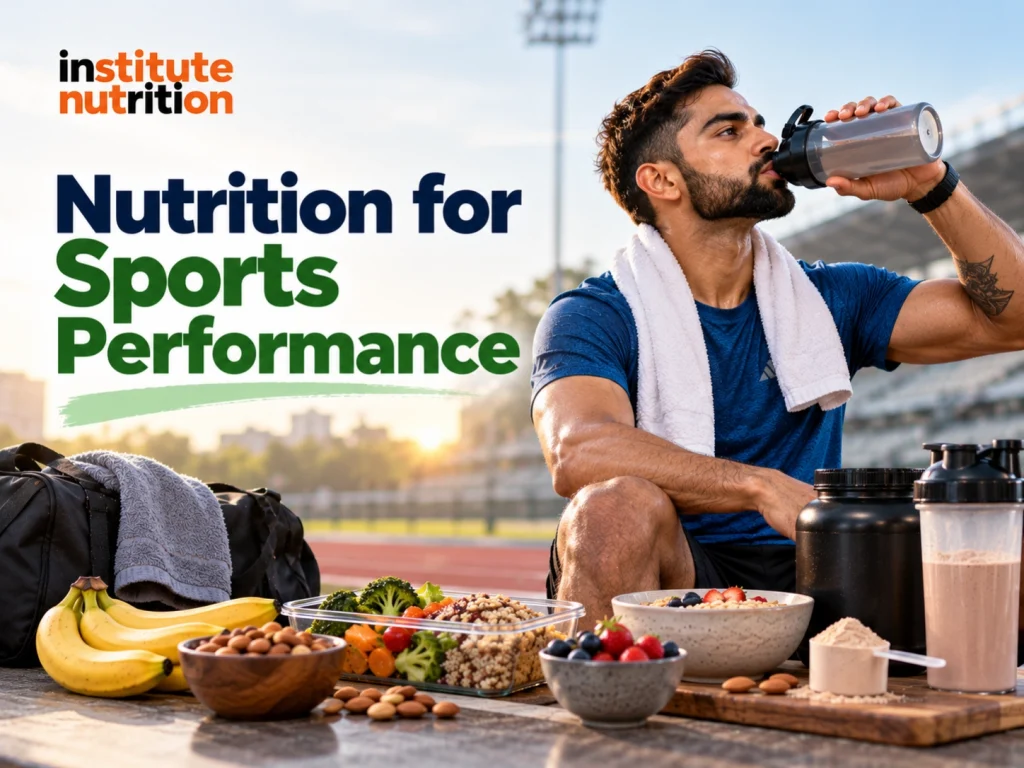
Your training plan might be excellent, but are you eating in a way that supports it?
Nutrition for sports performance is about matching your food, fluids and meal timing to your physical activity. The right approach can help athletes maintain energy, support muscle repair, manage training demands and prepare for competition.
You don’t necessarily need expensive supplements or a complicated meal plan. For many active people, the starting point is much simpler: eat enough, choose a balanced variety of foods, stay hydrated and plan meals around training.
In this guide, we’ll explore how sports nutrition works, what to eat before and after exercise, how much protein athletes may need, and how to build practical eating habits around your training schedule.
Quick answer: What is nutrition for sports performance?
Nutrition for sports performance is the practice of matching food, fluid intake and meal timing to an athlete’s training and competition demands. It focuses on providing enough energy, supporting recovery and maintaining health. Individual needs vary according to the sport, training intensity, body size, climate and health status.
Why Is Nutrition Important for Sports Performance?
Training challenges your body. Nutrition and recovery help it adapt to that challenge.
If you regularly train hard without eating enough, you may struggle to maintain energy, recover between sessions or perform consistently. Good nutrition helps support the work you’re already putting into your training.
Here are four important reasons nutrition matters:
- Energy: Carbohydrates help fuel moderate- and high-intensity exercise.
- Muscle repair: Protein supplies amino acids needed for tissue repair and adaptation.
- Hydration: Fluids help maintain normal body functions during exercise.
- Recovery: Adequate energy, nutrients and sleep support recovery between sessions.
Persistent fatigue, repeated injuries, frequent illness or a noticeable decline in performance can have several causes, including inadequate fuelling. These symptoms should not automatically be attributed to diet; consult a qualified healthcare professional if they continue.
Sports nutrition recommendations from the American College of Sports Medicine and other professional organisations emphasise appropriate food choices, fluid intake and meal timing for the athlete’s individual circumstances. You can read the ACSM’s published position statements.
1. Choose the Right Foods to Fuel Your Training
There is no single diet that works for every athlete. A marathon runner, a tennis player and someone who lifts weights several times a week have different training demands.
However, most sports nutrition plans consider three main macronutrients: carbohydrates, protein and fat.
Carbohydrates: Your Main Fuel for Intense Exercise
Carbohydrates help supply energy for moderate- and high-intensity exercise. Your requirements depend on how often you train, how long your sessions last and how demanding they are.
Common carbohydrate-rich foods include:
- Rice and other grains
- Oats and wholegrain bread
- Potatoes and sweet potatoes
- Bananas and other fruits
- Idli, dosa and other grain-based meals
For athletes undertaking substantial training, carbohydrate intake may need to increase to match their workload.
The following ranges are broad sports nutrition reference points, not personalised prescriptions.
| Training demand | Approximate carbohydrate intake |
|---|---|
| Light training | 3–5 g/kg of body weight/day |
| Moderate training, around one hour daily | 5–7 g/kg/day |
| Heavy training, around 1–3 hours daily | 6–10 g/kg/day |
| Very heavy training, around 4–5 hours daily | 8–12 g/kg/day |
These ranges come from established sports nutrition guidance and should be adjusted to the athlete’s actual needs.
Example: A 65 kg athlete training for approximately one hour a day might use the moderate-training range of 5–7 g/kg as a starting reference. This works out to approximately 325–455 g of carbohydrate per day.
That is not a target everyone should follow. The appropriate amount depends on the actual training load, health, goals and individual tolerance.
Protein: Support Muscle Repair and Recovery
Protein provides the amino acids your body needs to repair and maintain tissues. It is particularly relevant for athletes undertaking resistance training, endurance training or frequent demanding sessions.
For many exercising adults, approximately 1.2–2.0 g of protein per kilogram of body weight per day is a commonly used sports nutrition range. The appropriate amount varies by individual and training demands.
You can obtain protein from everyday foods, including:
- Eggs
- Milk, curd and paneer
- Fish and chicken
- Dal and other pulses
- Soybeans and tofu
- Beans and chickpeas
For example, an athlete weighing 60 kg would calculate the above range as approximately 72–120 g of protein per day. This is an illustrative calculation, not an individual prescription.
Instead of concentrating all your protein in one meal, include protein-containing foods across your meals and snacks.
Protein powders may be convenient for some people, but they are not essential for everyone.
Healthy Fats: Don’t Cut Them Out Completely
Dietary fat supports essential body functions, including the absorption of fat-soluble vitamins. It also provides energy and helps make meals satisfying.
Useful food choices include nuts, seeds, groundnuts, appropriate cooking oils and other sources of unsaturated fats.
Avoid removing entire food groups or cutting fat intake excessively just because you’re training for a particular body composition goal. Your overall diet should support both performance and health.
2. What Should You Eat Before, During and After Training?
Meal timing can help you manage energy and recovery. The best approach depends on when you train, how long your session lasts and what your stomach tolerates.
Before a Workout: Eat for Energy
A meal containing carbohydrates and some protein around two to four hours before a demanding session works well for many athletes.
Practical options include:
- Idli with sambar
- Rice with dal
- Oats with milk and fruit
- Toast with eggs
- Curd with fruit and oats
If you have only a short time before exercise, choose a smaller, familiar snack that you digest comfortably. A banana or toast may be suitable for some people.
Avoid experimenting with unfamiliar foods immediately before a competition.
During a Workout: Consider the Duration
Short, easy sessions generally do not require the same fuelling strategy as prolonged endurance training.
For longer or particularly demanding sessions, carbohydrate intake during exercise may help maintain performance. Sports nutrition guidance commonly uses approximately 30–60 g of carbohydrate per hour for many prolonged exercise sessions, with the appropriate strategy depending on duration, intensity and individual tolerance.
For longer events, some athletes may need a more specialised plan.
Practise your fuelling strategy during training rather than trying something new on competition day.
After a Workout: Replenish and Recover
After exercise, your body needs adequate food and fluids to support recovery.
A practical post-workout meal can include:
- Protein to support tissue repair.
- Carbohydrates to replenish energy stores.
- Fluids to replace losses from sweating.
For example, you could choose eggs with toast, curd with fruit, paneer with rice, or dal with rice.
If you have another demanding session later that day, recovery nutrition becomes especially important because you have less time to replenish energy stores.
There is no need to panic if you cannot eat immediately after every workout. Your total daily intake and overall recovery routine matter too.
3. Hydration for Better Sports Performance
Hydration is an important part of sports nutrition, but drinking as much water as possible is not the answer.
Your fluid requirements depend on the weather, exercise intensity, session duration, sweat rate and individual needs. Athletes training in hot and humid conditions may need to pay particular attention to fluid losses.
Try these practical habits:
- Start your session reasonably hydrated.
- Drink during exercise according to your needs and conditions.
- Pay attention to thirst and how you feel.
- For longer sessions or heavy sweating, consider whether additional electrolytes are appropriate.
- Replenish fluid losses after training.
One way to understand your sweat losses is to compare body weight immediately before and after a session, under consistent conditions. A reduction of approximately 1 kg can correspond to roughly 1 litre of net fluid loss, although food, fluid intake and other factors affect the calculation.
Avoid forcing excessive amounts of water. Drinking too much can also be dangerous.
For prolonged exercise, particularly in hot conditions, an individual hydration plan may be helpful.
4. Recovery Is More Than Protein
It is easy to focus on workouts and overlook what happens between them.
Recovery involves adequate nutrition, sleep, rest and appropriate training progression. Supplements cannot compensate for consistently inadequate food intake or insufficient recovery.
Consider these four habits:
- Eat enough: Match your food intake to your training demands.
- Sleep consistently: Protect sufficient sleep and recovery time.
- Plan meals: Keep convenient meals and snacks available for busy days.
- Eat a varied diet: Include vegetables, fruits, grains, protein sources and suitable fats.
Why Under-Fuelling Can Be a Problem
Regularly consuming less energy than your body needs for training and normal physiological functions can affect health and performance.
Possible warning signs include persistent fatigue, repeated injuries, poor recovery, declining performance and menstrual changes in people who menstruate.
These symptoms can have other causes, so they should not be used to diagnose a nutritional problem. If you notice them, seek advice from a qualified healthcare professional rather than simply increasing your training.
5. Do You Need Sports Nutrition Supplements?
Not every athlete needs supplements.
A balanced diet that meets your energy and nutrient requirements should be the starting point. Some supplements may be useful in specific circumstances, but their value depends on the individual, the product and the evidence supporting its use.
For example:
- Protein powder: May provide a convenient source of protein when food intake is insufficient or impractical.
- Creatine monohydrate: Has evidence supporting benefits for certain high-intensity exercise and training outcomes.
- Caffeine: May improve performance in some situations, but can cause side effects such as anxiety or sleep disruption.
- Electrolyte products: May be useful during prolonged exercise or when fluid and sodium losses are substantial.
- Vitamin and mineral supplements: May be appropriate when a deficiency or specific need has been identified.
Be cautious about products promising rapid muscle growth, dramatic fat loss or guaranteed performance improvements. Check ingredient information, product quality and any applicable anti-doping requirements.
The International Olympic Committee’s consensus statement explains that only a limited number of supplements have good evidence for particular performance benefits and that supplement decisions require careful consideration. Read the IOC consensus statement on dietary supplements and high-performance athletes.
For a practical breakdown, read our guide to sports nutrition supplements.
6. How Does Nutrition for Sports Performance Differ by Sport?
The basic principles are similar, but the details change according to the activity.
| Type of activity | Main nutrition considerations |
|---|---|
| Endurance sports, such as distance running | Adequate energy, carbohydrate availability, hydration and recovery |
| Strength training and bodybuilding | Sufficient energy and protein, appropriate carbohydrate intake and recovery |
| Team sports, such as football | Fuelling before and during demanding matches, hydration and recovery between games |
| Racket sports, such as tennis | Energy across repeated bouts of activity, fluids and recovery between matches |
| Recreational gym training | Balanced meals, adequate protein, hydration and consistency |
These are broad examples rather than individual plans. Training volume, competition schedules, climate, body size, dietary preferences and medical needs can all change the recommendations.
For more practical guidance, explore our article on sports nutrition for athletes.
7. When Should You Seek Professional Nutrition Guidance?
General nutrition advice can be a useful starting point, but it may not be sufficient for everyone.
Consider speaking to an appropriately qualified professional if you:
- Compete regularly or train at a high volume.
- Need a sport-specific fuelling strategy.
- Have persistent fatigue or recurring injuries.
- Follow a restrictive diet or have difficulty meeting your energy needs.
- Have a medical condition that affects your nutrition.
- Need help managing hydration and recovery during prolonged events.
If an underlying health condition is involved, sports nutrition may overlap with clinical nutrition. You can learn more in our guide to what clinical nutrition is or explore the Clinical Nutrition Course.
A qualified professional can help assess your circumstances and determine whether you need a personalised plan.
8. Learn More About Sports Nutrition
Are you a fitness trainer, coach or learner who wants to understand the relationship between nutrition, training and recovery?
Structured education can help you build your knowledge of sports nutrition principles and understand how they apply in different contexts.
Explore these learning options from Institute Nutrition:
Sports Nutrition Course
The Sports Nutrition Course covers sports nutrition and the anabolic diet. The course page lists a price of ₹1,999, lifetime access, three modules including a 20-question quiz, and instruction by Mandeep Sodhi.
Fitness Trainers Nutrition
The Fitness Trainers Nutrition course is another option for people interested in nutrition principles relevant to fitness training. The listed price is ₹2,999.
Tennis Nutrition
The Tennis Nutrition course offers a sport-specific learning option. The listed price is ₹499.
If you’re exploring different learning paths, browse all our nutrition courses online.
Please note: Institute Nutrition courses are intended for knowledge upgradation. Completing an online course does not, by itself, qualify or license someone to practise as a regulated nutritionist, dietitian or healthcare professional.
Frequently Asked Questions About Nutrition for Sports Performance
1. What is the best diet for sports performance?
There is no single best diet for every athlete. A suitable approach provides enough energy, carbohydrates, protein, fats, vitamins, minerals and fluids for the individual’s training demands, health and preferences.
2. How many carbohydrates do athletes need daily?
Requirements depend on training volume and intensity. Broad sports nutrition guidance ranges from around 3–5 g/kg of body weight per day for light training to approximately 8–12 g/kg for very heavy training. These are general reference ranges, not personalised targets.
3. How much protein does an athlete need?
A commonly used range for many exercising adults is approximately 1.2–2.0 g/kg of body weight per day. Needs vary with training, health and goals, so a qualified professional can help determine an appropriate intake.
4. What should I eat before a workout?
Many people do well with a carbohydrate-rich meal containing some protein around two to four hours before a demanding session. If there is less time, a smaller, familiar and easily digested snack may be more suitable.
5. Are sports drinks necessary during exercise?
Not always. Water is often sufficient for short, easy sessions. Sports drinks containing carbohydrates and electrolytes may be useful during prolonged exercise, heavy sweating or demanding sessions, depending on individual needs.
6. Are supplements necessary for sports performance?
No. Supplements are not essential for everyone. Their usefulness depends on the person’s diet, training, health, product quality and the evidence supporting the specific supplement.
7. Can I follow the same sports nutrition plan every day?
Not necessarily. Your energy and fluid requirements can change with training intensity, rest days, competition schedules and environmental conditions. Your nutrition plan should reflect those changes.
8. Can a nutrition course help me understand sports nutrition?
A course can help you build knowledge of sports nutrition concepts, meal timing, hydration and recovery. However, course completion alone does not grant a professional licence or authorisation to practise in a regulated healthcare role.
Final Thoughts
Nutrition for sports performance is about consistency, not perfection.
Start by eating enough to support your training, choosing balanced meals, timing food around demanding sessions, staying hydrated and allowing time for recovery.
Supplements may have a role in particular circumstances, but they should not replace a sound nutrition foundation.
If you want to understand these principles in more depth, explore our Sports Nutrition Course or browse the wider range of nutrition courses online.