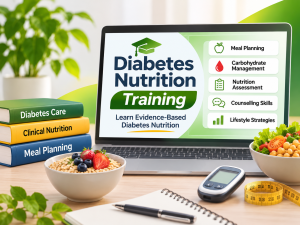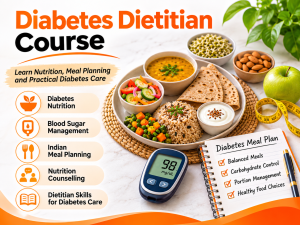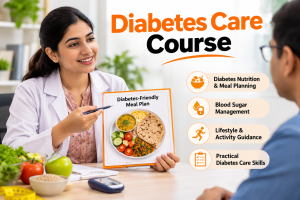
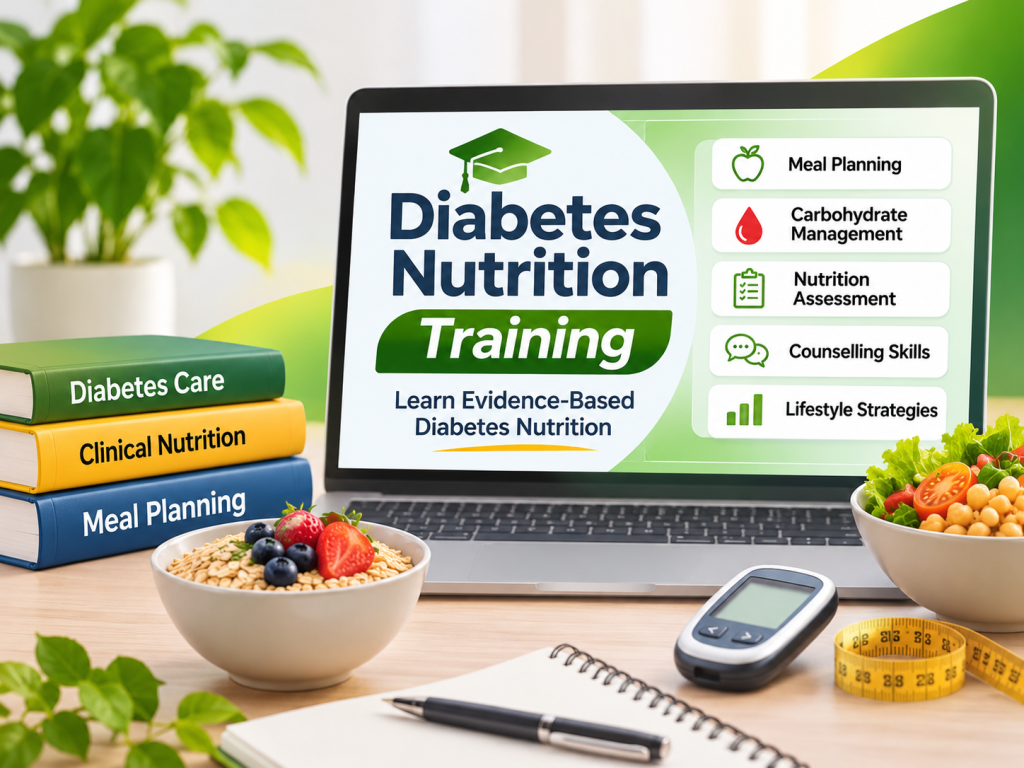
Diabetes nutrition is about much more than avoiding sugar. It involves understanding how different foods affect blood glucose, planning balanced meals, recognising individual nutritional requirements and helping people develop sustainable eating habits. As diabetes continues to be an important public health concern in India, knowledge of nutrition and lifestyle management has become increasingly valuable.
This is where Diabetes Nutrition Training becomes relevant. Structured learning can help nutrition students, dietetics graduates and healthcare professionals understand the relationship between food, metabolism and diabetes management.
From traditional South Indian breakfasts to everyday North Indian meals, effective nutrition education must consider the way people actually eat. A practical approach should combine scientific knowledge with culturally appropriate food choices rather than relying on generic diet charts.
Whether you are beginning your journey in nutrition or looking to strengthen your existing knowledge, Diabetes Nutrition Training can help you explore the principles of diabetes nutrition and their practical applications.
What Is Diabetes Nutrition Training?
Diabetes Nutrition Training is a learning process that introduces participants to the nutritional principles involved in diabetes management. It focuses on how food choices, meal composition, physical activity and lifestyle habits can influence blood glucose and overall metabolic health.
The subject brings together nutrition science and practical dietary education. Learners can develop an understanding of how to assess food habits, identify carbohydrate sources, plan balanced meals and communicate nutrition information responsibly.
Depending on the programme, Diabetes Nutrition Training may cover:
- Fundamentals of diabetes and glucose regulation.
- Types of diabetes and their nutritional considerations.
- Carbohydrate awareness and portion management.
- Medical Nutrition Therapy principles.
- Nutrition assessment and dietary planning.
- Glycaemic index and glycaemic load.
- Indian food patterns and balanced meal preparation.
- Lifestyle factors and physical activity.
- Nutrition counselling and behaviour change.
- Diabetes-related complications and preventive care.
The exact curriculum and practical components differ between institutions. Learners should review the syllabus, eligibility requirements and certification details before choosing a programme.
Why Is Diabetes Nutrition Knowledge Important in India?
India has a diverse food culture. Eating habits differ across states, communities, households and income groups. Rice, wheat, millets, pulses, vegetables, dairy products and regional specialities all contribute to everyday diets.
For this reason, diabetes nutrition education needs to be relevant to local food patterns.
Consider a person living in Chennai who regularly eats idli, dosa, rice, sambar and rasam. Another person in Delhi may prefer roti, dal, sabzi and curd. Both individuals need practical nutritional guidance that considers their usual meals, health requirements and lifestyle.
A generic instruction to stop eating rice or carbohydrates may not provide the balanced and individualised approach required for effective nutrition education.
Diabetes Nutrition Training helps learners understand why food choices should be assessed in context. It encourages consideration of portion sizes, meal combinations, preparation methods, nutritional quality and individual requirements.
The Indian Council of Medical Research–National Institute of Nutrition provides dietary guidance relevant to Indian food habits. Its resources are useful for understanding balanced nutrition and healthy eating patterns.
Understanding the Relationship Between Food and Blood Glucose
One of the foundations of Diabetes Nutrition Training is understanding how food affects blood glucose levels.
When carbohydrate-containing foods are digested, carbohydrates are broken down into glucose, which enters the bloodstream. Insulin helps the body use glucose for energy. In people with diabetes, insulin production or action is affected, which can lead to elevated blood glucose levels.
Several factors can influence the glucose response to a meal, including:
- The total amount of carbohydrate consumed.
- The type and processing of carbohydrate-containing foods.
- The amount of dietary fibre.
- The combination of carbohydrates, protein and fat.
- Meal timing and portion size.
- Physical activity and individual metabolic factors.
For example, rice, chapati, bread, potatoes, fruits and millets all contain carbohydrates, although their nutritional composition differs.
A nutrition professional needs to understand these differences rather than categorising every carbohydrate-containing food as unsuitable.
Through Diabetes Nutrition Training, learners can develop a stronger foundation in carbohydrate awareness and balanced meal planning.
Key Nutrition Concepts Covered in Diabetes Nutrition Training
A structured programme should help learners understand the major concepts involved in diabetes-related nutrition.
1. Carbohydrate Management
Carbohydrate management involves identifying carbohydrate sources and understanding their quantities in everyday meals.
Common Indian sources include:
- Rice and rice-based foods.
- Wheat, chapati and bread.
- Idli and dosa.
- Millets and other cereals.
- Potatoes and other starchy vegetables.
- Fruits, milk and yoghurt.
Understanding portion sizes is important because the quantity consumed can influence the overall carbohydrate content of a meal.
Diabetes Nutrition Training can introduce learners to carbohydrate counting, food labels, portion estimation and meal composition.
2. Glycaemic Index and Glycaemic Load
The glycaemic index (GI) describes how quickly a carbohydrate-containing food raises blood glucose compared with a reference food.
Glycaemic load (GL) also considers the quantity of carbohydrate in a serving.
These concepts can support nutrition education, but neither should be used alone to decide whether a food is suitable for an individual. Portion size, overall meal composition and personal health requirements also matter.
3. Dietary Fibre
Dietary fibre is found in vegetables, pulses, whole grains, fruits, nuts and seeds.
Understanding fibre-rich food choices is an important part of balanced nutrition education. Learners should also understand how to incorporate these foods into familiar meals.
4. Protein and Healthy Fats
Protein sources such as dal, chickpeas, beans, eggs, fish, paneer and curd can contribute to balanced meal planning.
Nuts, seeds and suitable vegetable oils can also form part of an individual’s dietary pattern. The quantity and choice of these foods should reflect individual nutritional needs.
5. Medical Nutrition Therapy
Medical Nutrition Therapy (MNT) applies nutrition and behavioural science to support people with health conditions.
For diabetes, it involves nutritional assessment, setting individualised goals, developing appropriate nutrition interventions and evaluating progress.
The ICMR guidelines for Type 2 diabetes describe this individualised approach, including assessment of metabolic, nutritional and lifestyle factors.
Understanding MNT is an important part of Diabetes Nutrition Training, particularly for learners interested in clinical nutrition.
Practical Indian Meal Planning for Diabetes Nutrition
Theory becomes more meaningful when learners can apply it to everyday meals.
A practical Diabetes Nutrition Training programme should introduce the principles of balanced meal planning using foods that people regularly consume.
Here are examples of common Indian meal combinations:
| Meal | Example food combination |
|---|---|
| Breakfast | Idli with sambar and vegetables |
| Breakfast alternative | Vegetable dosa with an appropriate accompaniment |
| Lunch | Rice, dal, vegetable poriyal and curd |
| Lunch alternative | Whole-wheat roti, dal and mixed vegetables |
| Evening snack | A suitable portion of nuts or whole fruit |
| Dinner | Roti with vegetables and a suitable protein source |
These are general examples, not prescribed meal plans. Individual portions and food choices must be based on nutritional assessment and medical requirements.
Example: Planning a South Indian Meal
A person who regularly eats rice for lunch does not necessarily need to eliminate it entirely.
A nutrition professional can discuss the overall meal, including:
- The quantity of rice.
- The presence of dal or another protein source.
- The amount and variety of vegetables.
- Suitable accompaniments.
- The person’s total daily nutritional requirements.
Example: Planning a North Indian Meal
For someone who prefers roti, dal and sabzi, meal planning can consider:
- The number and size of rotis.
- The type of dal or protein source.
- Vegetable variety.
- Cooking methods and added fats.
- Overall meal balance.
These examples show why Diabetes Nutrition Training should focus on practical dietary understanding rather than one-size-fits-all recommendations.
Understanding Different Types of Diabetes
Nutrition education also requires a basic understanding of the different forms of diabetes.
Type 1 Diabetes
Type 1 diabetes is an autoimmune condition in which the immune system damages the insulin-producing cells of the pancreas. People with Type 1 diabetes require insulin treatment.
Nutrition education may include carbohydrate awareness, meal timing and understanding how food and physical activity interact with insulin requirements.
Type 2 Diabetes
Type 2 diabetes involves insulin resistance and may also involve inadequate insulin production.
Nutrition, physical activity, medication when prescribed and regular monitoring can all contribute to its management.
Gestational Diabetes
Gestational diabetes develops during pregnancy and requires appropriate medical supervision.
Nutrition education can support discussions about balanced meals and dietary requirements in coordination with the individual’s obstetric and diabetes care team.
A good Diabetes Nutrition Training programme should introduce these differences and explain why nutritional approaches need to be individualised.
Nutrition Assessment: The Foundation of Personalised Meal Planning
Before recommending dietary changes, nutrition professionals need to understand the individual.
Nutrition assessment helps identify relevant information about food habits, health status, lifestyle and nutritional requirements.
Important assessment areas may include:
Dietary history: Understanding the person’s usual meals, food preferences, meal timings and eating patterns.
Anthropometric measurements: Considering relevant measurements such as height, weight and body composition where appropriate.
Medical history: Reviewing relevant medical conditions, medications and health concerns within the professional’s scope.
Lifestyle assessment: Understanding physical activity, sleep, work routines and other behavioural factors.
Nutritional requirements: Considering energy, macronutrient and micronutrient needs.
Monitoring and evaluation: Reviewing progress and adjusting nutrition strategies when necessary.
Diabetes Nutrition Training can help learners understand why assessment should come before individualised meal planning.
The Importance of Nutrition Counselling and Behaviour Change
A person may understand which foods are nutritious but still find it difficult to change everyday eating habits.
Work schedules, family meals, food availability, cultural preferences and financial considerations can all influence dietary decisions.
This is why communication and counselling skills are important.
For example, a working professional in Bengaluru may frequently eat outside because of a busy schedule. A practical nutrition discussion could focus on making balanced choices when eating at restaurants instead of expecting the person to prepare every meal at home.
Similarly, a family in Tamil Nadu may prefer traditional rice-based meals. Nutrition education can focus on meal composition and appropriate portions while respecting their food preferences.
Diabetes Nutrition Training should therefore encourage learners to understand behaviour change, goal setting, active listening and realistic nutrition education.
The objective is to help people make sustainable choices, not to create unnecessary restrictions.
Lifestyle Factors That Influence Diabetes Management
Nutrition is an important component of diabetes care, but it does not work in isolation.
Other lifestyle factors can influence metabolic health and overall well-being.
Physical Activity
Regular physical activity supports overall health and can contribute to improved insulin sensitivity. Exercise recommendations should consider an individual’s health status and medical advice.
Sleep Quality
Sleep patterns can influence appetite, energy levels and metabolic health. Understanding healthy sleep habits is relevant to broader lifestyle education.
Stress Management
Stress can affect daily routines, eating behaviour and glucose regulation. Appropriate stress-management strategies can form part of a comprehensive lifestyle approach.
Regular Monitoring
People living with diabetes may require regular blood glucose monitoring and medical follow-up according to their healthcare team’s recommendations.
A Diabetes Nutrition Training programme should help learners understand how nutrition fits into this wider approach to diabetes management.
Who Can Benefit from Diabetes Nutrition Training?
This area of learning may be relevant to individuals from different educational and professional backgrounds.
Nutrition students: Students can strengthen their understanding of clinical nutrition and diabetes-related dietary principles.
Dietetics graduates: Graduates may use additional learning to develop specialised knowledge in diabetes nutrition.
Healthcare professionals: Eligible healthcare professionals may benefit from understanding the relationship between food, lifestyle and diabetes management.
Fitness and wellness professionals: They can develop awareness of nutrition considerations while recognising the limits of their professional scope.
Individuals interested in nutrition: People who want to understand diabetes nutrition more deeply may explore educational resources and suitable programmes.
Before enrolling in any Diabetes Nutrition Training programme, check its eligibility requirements and whether the learning outcomes match your background and goals.
How to Choose the Right Diabetes Nutrition Training Programme
Not every programme offers the same depth of learning. It is important to evaluate the course before making a decision.
Consider these factors:
1. Curriculum and Learning Outcomes
Check whether the programme includes diabetes fundamentals, carbohydrate management, nutrition assessment, meal planning and lifestyle education.
2. Scientific and Educational Quality
Look for content based on established nutrition principles and credible references rather than unsupported dietary claims.
3. Practical Application
Case discussions, food-based examples and meal-planning exercises can help learners understand how nutrition concepts apply to real-life situations.
4. Faculty Background
Review the qualifications and relevant experience of the educators responsible for delivering the programme.
5. Learning Format
Online programmes may offer flexibility for students and working professionals. Check whether the format includes recorded lessons, live sessions, assignments or assessments.
6. Certification Details
Understand the certificate awarded, the institution providing it and any professional limitations. A short course certificate does not automatically grant a licence or replace required academic qualifications.
Choosing the right Diabetes Nutrition Training programme means looking beyond promotional claims and evaluating the actual learning experience.
How Diabetes Nutrition Training Can Support Professional Development
Nutrition is a broad field with opportunities across clinical settings, public health, wellness education and nutrition-related services.
Developing knowledge of diabetes nutrition may help learners strengthen their understanding of:
- Clinical nutrition concepts.
- Dietary assessment.
- Individualised meal planning.
- Nutrition education and counselling.
- Carbohydrate awareness.
- Lifestyle-related health considerations.
- Evidence-based dietary practices.
Depending on their existing academic qualifications and applicable professional requirements, learners may explore opportunities in hospitals, clinics, wellness centres, nutrition practices and community health initiatives.
Diabetes Nutrition Training can be a useful additional learning opportunity for individuals interested in this area. However, professional eligibility depends on the person’s qualifications, credentials and scope of practice.
Learning from Reliable Nutrition Resources
Nutrition information is widely available online, but not every recommendation is supported by scientific evidence.
Learners should develop the habit of referring to credible educational and research-based resources.
The ICMR–National Institute of Nutrition provides information about dietary guidelines, nutrition research and healthy eating in India.
The ICMR’s Guidelines for Management of Type 2 Diabetes also explain the role of nutrition, lifestyle and individualised Medical Nutrition Therapy.
For additional perspectives on nutrition and personalised dietary approaches, learners can explore Ryan Fernando’s official website.
Using reliable resources alongside structured Diabetes Nutrition Training can help learners develop a more informed understanding of nutrition and diabetes care.
Explore the Diabetes Nutrition Course at Institute Nutrition
If you want to develop your knowledge of diabetes-related nutrition, exploring a structured educational programme can be a useful next step.
The Diabetes Nutrition Course at Institute Nutrition is relevant to learners interested in building their understanding of diabetes nutrition.
Before enrolling, review the available course information, curriculum, eligibility criteria and certification details to determine whether it matches your learning objectives.
Structured Diabetes Nutrition Training can help learners organise their knowledge and explore how nutrition principles relate to everyday dietary decisions and diabetes care.
Frequently Asked Questions
1. What is Diabetes Nutrition Training?
Diabetes Nutrition Training is an educational process focused on understanding the relationship between nutrition, blood glucose, meal planning and lifestyle management. The content varies depending on the programme.
2. Who should consider Diabetes Nutrition Training?
Nutrition students, dietetics graduates and eligible healthcare professionals may find this learning area relevant. Individuals interested in nutrition education can also explore suitable introductory resources.
3. What topics are covered in Diabetes Nutrition Training?
Common topics include diabetes fundamentals, carbohydrate management, glycaemic index, Medical Nutrition Therapy, nutrition assessment, Indian meal planning and nutrition counselling.
4. Is Diabetes Nutrition Training available online?
Some institutions offer online learning programmes in diabetes nutrition. Learners should check the course format, faculty, curriculum, assessment and certification details before enrolling.
5. Why is Indian meal planning important in diabetes nutrition?
Indian diets include different grains, pulses, vegetables and regional food preparations. Understanding these patterns helps nutrition professionals discuss realistic meal choices that respect individual preferences.
6. What is Medical Nutrition Therapy for diabetes?
Medical Nutrition Therapy is an individualised approach that uses nutrition assessment, goal setting, dietary intervention and evaluation to support health management. It should be delivered by appropriately qualified professionals.
7. Can Diabetes Nutrition Training help with career development?
It may help learners strengthen their knowledge of diabetes-related nutrition. Career opportunities and professional eligibility depend on their underlying qualifications and applicable requirements.
8. Does completing a diabetes nutrition course qualify someone as a registered dietitian?
Not automatically. A short course certificate does not replace required academic qualifications, professional registration or other applicable requirements.
9. Where can I learn more about diabetes nutrition?
You can explore the Diabetes Nutrition Course at Institute Nutrition and refer to recognised resources such as ICMR–National Institute of Nutrition.
Conclusion
Understanding diabetes nutrition requires more than memorising lists of foods to eat or avoid. It involves learning how food, lifestyle, individual requirements and medical considerations work together.
From planning familiar Indian meals to understanding carbohydrate intake and nutrition assessment, practical knowledge can help learners develop a stronger foundation in diabetes-related nutrition.
Diabetes Nutrition Training offers a structured way to explore these concepts and understand their relevance to nutrition education and professional development.
If you are interested in expanding your knowledge, explore the Diabetes Nutrition Course at Institute Nutrition and review its learning objectives to see whether it aligns with your educational and professional goals.
Disclaimer: This article is for educational purposes only and is not a substitute for medical advice, diagnosis or treatment. People living with diabetes should consult qualified healthcare professionals before changing their diet, medication or exercise routine.