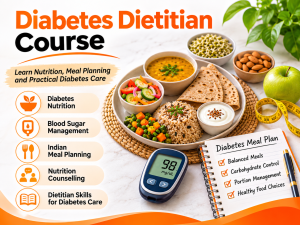
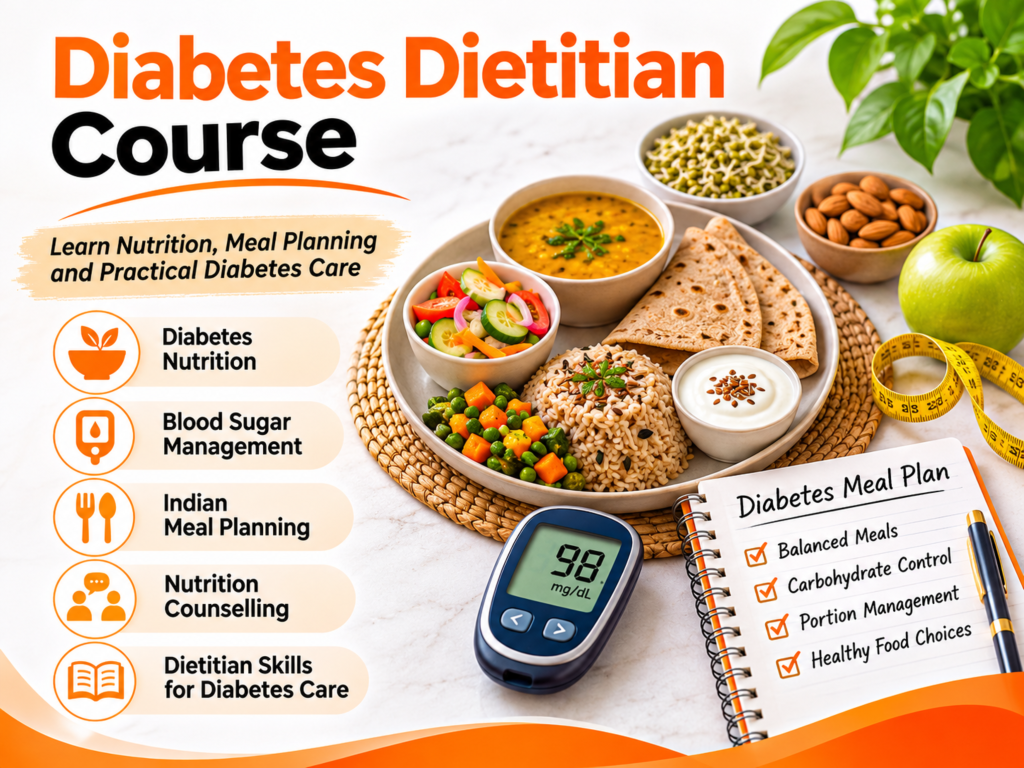
Diabetes management is not just about reducing sugar or avoiding certain foods. It involves understanding nutrition, making informed food choices, managing carbohydrate intake and developing sustainable lifestyle habits. As awareness of diabetes continues to grow across India, the role of qualified nutrition and dietetics professionals has become increasingly important.
A Diabetes Dietitian Course can help learners develop a stronger understanding of how food choices influence blood glucose levels and how personalised nutrition strategies can support people living with diabetes.
From understanding traditional Indian meals to learning the principles of clinical nutrition, this area of study combines scientific knowledge with practical applications. Whether you are a nutrition graduate, dietetics student or healthcare professional, exploring a Diabetes Dietitian Course can be a valuable step in your professional learning journey.
What Is a Diabetes Dietitian Course?
A Diabetes Dietitian Course is a specialised learning programme that focuses on the nutritional aspects of diabetes management. It introduces learners to the relationship between food, blood glucose, metabolism and lifestyle habits.
The course may cover subjects such as:
- Fundamentals of diabetes and its different types.
- Carbohydrate awareness and portion management.
- Nutrition assessment and meal planning.
- Understanding blood glucose monitoring.
- Indian dietary patterns and balanced nutrition.
- Nutrition counselling and patient communication.
- Lifestyle management and diabetes-related complications.
The exact syllabus, practical training and eligibility requirements vary between institutions. Before enrolling, learners should review the programme details and understand what the qualification represents.
Why Is Diabetes Nutrition Education Important in India?
India has diverse food habits, regional cuisines and eating patterns. This makes practical nutrition education particularly important when supporting people with diabetes.
For example, a typical South Indian meal may include rice, sambar, rasam, poriyal and curd. In North India, meals may commonly include roti, dal, sabzi and curd. Both patterns can be considered within a balanced dietary approach, depending on food quantities, preparation methods and individual nutritional requirements.
A dietitian needs to understand these differences rather than recommend the same diet chart to every person.
A Diabetes Dietitian Course can introduce learners to the importance of adapting nutrition recommendations to an individual’s food preferences, health status, lifestyle and cultural background.
India’s ICMR–National Institute of Nutrition provides dietary guidance that can help learners understand healthy eating patterns within the Indian context. Its Dietary Guidelines for Indians are a useful reference for nutrition education.
Understanding the Role of a Dietitian in Diabetes Management
A dietitian plays an important role in helping individuals understand how their eating habits relate to their overall health.
The work goes beyond preparing a diet chart. It involves assessing nutritional requirements, discussing food preferences, identifying practical challenges and helping individuals follow sustainable dietary habits.
Some important responsibilities include:
1. Understanding Individual Nutrition Requirements
Every individual has different nutritional needs. Age, physical activity, medical history, body composition and other health conditions can influence dietary requirements.
A dietitian must consider these factors before developing nutrition recommendations.
2. Supporting Balanced Meal Planning
Meal planning involves understanding food groups, portion sizes and the nutritional composition of meals.
For example, an individual who regularly eats rice may benefit from learning about appropriate portions, vegetables, protein sources and overall meal balance rather than being told to eliminate rice completely.
3. Educating People About Carbohydrates
Carbohydrates influence blood glucose levels. Dietitians need to understand common carbohydrate sources, including rice, wheat, millets, fruits, potatoes and bakery products.
They should also understand how portion sizes and meal composition can affect an individual’s nutritional plan.
4. Encouraging Sustainable Lifestyle Habits
Nutrition education is more effective when it considers real-life routines. A person working long hours in Chennai or Bengaluru may need practical meal-planning strategies that fit their working schedule.
Dietitians can help individuals identify realistic dietary habits while working within their professional scope.
A Diabetes Dietitian Course introduces learners to these important responsibilities and helps them appreciate the role of nutrition professionals in multidisciplinary diabetes care.
Important Nutrition Concepts Covered in a Diabetes Dietitian Course
A strong foundation in diabetes nutrition requires an understanding of several important concepts.
Carbohydrate Management
Carbohydrates are found in many everyday foods, including rice, chapati, dosa, idli, fruits and cereals. Learning to identify carbohydrate sources and understand portion sizes is an important part of diabetes nutrition education.
Protein and Healthy Fats
Protein sources such as dal, chickpeas, eggs, fish, paneer and curd can contribute to balanced meal planning.
Healthy fat sources, including nuts, seeds and suitable vegetable oils, also have a place in an individual’s overall dietary pattern.
Dietary Fibre
Vegetables, pulses, whole grains, fruits and other fibre-containing foods can contribute to a balanced diet. Understanding their nutritional value is useful when developing meal plans.
Glycaemic Index and Glycaemic Load
The glycaemic index describes how quickly carbohydrate-containing foods may raise blood glucose compared with a reference food. Glycaemic load also considers the amount of carbohydrate in a serving.
These concepts can help learners understand food choices, but they should not be used in isolation to determine whether a food is suitable for every individual.
Nutrition Assessment
Nutrition assessment involves gathering relevant information about a person’s dietary habits, health background, lifestyle and nutritional requirements.
This information helps qualified professionals develop appropriate nutrition interventions and monitor progress.
Practical Indian Meal Planning for People With Diabetes
One of the most useful aspects of a Diabetes Dietitian Course is understanding how nutrition concepts can be applied to everyday Indian meals.
Rather than focusing only on foods to avoid, dietitians should understand how to create balanced meals using familiar and accessible ingredients.
Here are some examples of common Indian foods that can be considered during meal planning:
| Meal | Example food choices |
|---|---|
| Breakfast | Idli with sambar, vegetable dosa or oats |
| Mid-morning | A suitable portion of whole fruit |
| Lunch | Rice or roti with dal, vegetables and curd |
| Evening snack | Unsalted nuts or a suitable protein-rich snack |
| Dinner | Roti with vegetable curry and a protein source |
These are general examples, not a personalised diabetes diet plan. Portion sizes and food choices should be adjusted according to individual health requirements and professional advice.
A person in Tamil Nadu may prefer traditional meals such as idli, dosa, sambar and rice, while someone in Maharashtra may regularly consume bhakri, dal and vegetable preparations. A dietitian should understand these regional preferences when discussing practical nutrition strategies.
A Diabetes Dietitian Course can help learners appreciate why culturally appropriate meal planning is important for long-term dietary consistency.
Different Types of Diabetes Every Aspiring Dietitian Should Understand
Diabetes is not a single condition. Understanding its different types is essential for anyone interested in clinical nutrition.
Type 1 Diabetes
Type 1 diabetes is an autoimmune condition in which the pancreas produces little or no insulin because insulin-producing cells are damaged.
People with Type 1 diabetes require insulin treatment. Nutrition education may include carbohydrate awareness, meal timing and understanding how food and physical activity relate to blood glucose levels.
Type 2 Diabetes
Type 2 diabetes involves insulin resistance and, over time, may also involve insufficient insulin production.
Nutrition, physical activity, prescribed medication and regular monitoring can all form part of its management.
Gestational Diabetes
Gestational diabetes develops during pregnancy and requires appropriate medical monitoring.
Nutrition professionals may contribute to dietary education and meal planning in coordination with the individual’s obstetric and diabetes care team.
A Diabetes Dietitian Course should introduce learners to these conditions and explain why nutrition recommendations must be individualised.
Nutrition Counselling: An Essential Skill for Dietitians
Knowing nutrition science is important, but communicating that knowledge effectively is equally valuable.
People living with diabetes may face challenges such as:
- Difficulty changing long-standing eating habits.
- Confusion about carbohydrate-containing foods.
- Irregular meal timings due to work schedules.
- Dependence on restaurant meals or packaged foods.
- Conflicting information from social media.
- Difficulty following restrictive or unrealistic diet plans.
A dietitian should listen to these concerns and help individuals identify achievable changes.
For example, instead of asking a person to completely stop eating their preferred traditional meals, a nutrition professional can discuss meal composition, portion management and suitable alternatives.
A Diabetes Dietitian Course can help learners understand the importance of communication, nutrition education and responsible counselling practices.
How to Choose the Right Diabetes Dietitian Course
Choosing an educational programme requires more than looking at its title or certificate. Learners should evaluate the quality and relevance of the programme before enrolling.
Consider these factors:
1. Course curriculum: Check whether the syllabus includes diabetes fundamentals, clinical nutrition, meal planning, carbohydrate management and nutrition counselling.
2. Scientific foundation: Look for learning material that reflects established nutrition principles and credible educational references.
3. Practical application: Case discussions, meal-planning exercises and practical examples can help learners connect theoretical knowledge with real-world situations.
4. Faculty experience: Review the qualifications and relevant professional experience of the educators.
5. Learning flexibility: Online learning may be useful for students and working professionals who need to manage their schedules.
6. Certification and eligibility: Understand the certificate awarded, entry requirements and any professional limitations. Completing a short course does not automatically qualify someone to practise as a registered dietitian or replace required academic qualifications.
A carefully selected Diabetes Dietitian Course should support your existing education and align with your professional development goals.
How Diabetes Nutrition Knowledge Can Support Career Development
Nutrition and dietetics involve several areas of professional practice, including clinical nutrition, community health, wellness education and lifestyle-related health support.
Developing knowledge of diabetes nutrition may help learners strengthen their understanding of:
- Clinical nutrition principles.
- Individualised meal planning.
- Nutrition assessment.
- Dietary education.
- Patient communication.
- Evidence-based nutrition practices.
Depending on their academic qualifications, professional credentials and applicable requirements, learners may explore opportunities in hospitals, clinics, wellness centres, nutrition practices and community health programmes.
A Diabetes Dietitian Course can be a useful additional learning opportunity for individuals who want to build knowledge in this specialised area. However, career eligibility depends on the learner’s underlying qualifications and relevant professional requirements.
Learning From Nutrition Experts and Evidence-Based Resources
Nutrition education continues to develop as research improves our understanding of metabolism, dietary patterns and individual health requirements.
Learners should make an effort to refer to reliable sources instead of depending entirely on social media trends or unverified dietary claims.
For additional perspectives on personalised nutrition, healthy eating and medical nutrition, learners can explore Ryan Fernando’s official website.
The website shares nutrition-related information and resources, including content on medical nutrition, metabolic health and personalised dietary approaches.
For Indian dietary guidance, the ICMR–National Institute of Nutrition is another important resource. Its guidelines help readers understand balanced food choices within the Indian context.
Combining structured education with reliable references can help learners develop a more responsible understanding of diabetes nutrition.
Why Consider a Diabetes Nutrition Course at Institute Nutrition?
For individuals interested in developing their knowledge of diabetes-related nutrition, choosing a structured educational programme is an important first step.
The Diabetes Nutrition Course at Institute Nutrition is a relevant programme to explore if you want to learn more about diabetes nutrition and its practical applications.
Before enrolling, review the available course details, syllabus, eligibility requirements and certification information to determine whether the programme matches your learning objectives.
A structured learning approach can help you develop a clearer understanding of nutrition concepts and how they relate to diabetes care.
Frequently Asked Questions
1. What is a Diabetes Dietitian Course?
A Diabetes Dietitian Course is a specialised educational programme focused on diabetes nutrition, dietary planning, carbohydrate awareness and nutritional approaches to diabetes management. The exact curriculum varies by institution.
2. Who can enrol in a Diabetes Dietitian Course?
Nutrition students, dietetics graduates and eligible healthcare professionals may find this area of study relevant. Entry requirements depend on the institution and programme.
3. What subjects are covered in a Diabetes Dietitian Course?
Common subjects may include diabetes fundamentals, nutrition assessment, carbohydrate management, meal planning, dietary counselling, lifestyle factors and diabetes-related complications.
4. Can I study diabetes nutrition online?
Some institutions offer online nutrition education programmes. Check the learning format, syllabus, faculty, assessment process and certification details before enrolling.
5. Why is Indian meal planning important in diabetes care?
Indian food habits vary across regions. Understanding traditional meals, ingredients, portion sizes and cooking practices helps nutrition professionals discuss dietary strategies that are practical and culturally appropriate.
6. Does completing a Diabetes Dietitian Course make me a registered dietitian?
No. Completing a short course does not automatically provide registered dietitian status or professional licensing. Relevant academic qualifications and applicable professional requirements must be considered.
7. What is the difference between a dietitian and a nutritionist?
The terms can have different professional and regulatory meanings depending on the country and setting. Their qualifications, scope of practice and responsibilities should be evaluated rather than assuming the titles are interchangeable.
8. Where can I learn more about diabetes nutrition?
You can explore the Diabetes Nutrition Course at Institute Nutrition and consult recognised resources such as the ICMR–National Institute of Nutrition for additional information.
Conclusion
Diabetes nutrition is an important area of healthcare education that requires scientific understanding, practical meal-planning knowledge and effective communication.
From understanding carbohydrate sources to adapting traditional Indian meals, nutrition professionals need to consider each individual’s dietary preferences, health requirements and lifestyle.
A Diabetes Dietitian Course can be a valuable learning opportunity for individuals who want to develop their knowledge of diabetes nutrition and strengthen their understanding of dietary management.
If you are interested in exploring this subject further, consider reviewing the Diabetes Nutrition Course at Institute Nutrition to understand its learning objectives and whether it aligns with your professional goals.
Disclaimer: This article is intended for educational purposes only. It does not provide medical advice or replace professional diagnosis and treatment. People living with diabetes should consult qualified healthcare professionals before making changes to their diet, medication or physical activity.