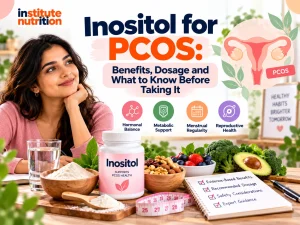
If you have polycystic ovary syndrome (PCOS), you may have come across inositol while searching for ways to support hormonal health, menstrual regularity, or metabolic health. It is frequently discussed in women’s health communities, nutrition articles, and supplement advertisements.
But does inositol actually help with PCOS? Which type should you choose? And is there a recommended dosage that works for everyone?
The answers are more complicated than many supplement labels suggest.
Inositol has been studied for its potential role in PCOS management, particularly because of its relationship with insulin signalling. However, the evidence remains limited, and researchers have not established a single formulation or dosage that is best for everyone.
This guide explains what inositol is, what current research suggests, the differences between myo-inositol and D-chiro-inositol, and what to consider before taking a supplement.
Important: This article provides general educational information. It is not a diagnosis or a personalized treatment plan. Speak with a qualified healthcare professional before starting a supplement, especially if you are taking medication, managing another medical condition, or trying to conceive.
What Is Inositol?
Inositol is a naturally occurring compound found in the human body and in foods such as fruits, beans, grains, nuts, and seeds. It plays a role in cell signalling, including pathways involved in insulin activity.
Insulin helps the body regulate blood glucose levels. Some people with PCOS experience insulin resistance, in which the body’s cells do not respond to insulin as effectively as they should.
Insulin resistance is not present in every person with PCOS, and it cannot be identified reliably from body weight alone. Nevertheless, insulin-related pathways are one reason researchers have investigated inositol as a possible supportive option.
Inositol supplements are often marketed for hormonal balance, menstrual regularity, and reproductive health. These claims should be considered carefully because the strength of the evidence varies by outcome.
A supplement that may influence a metabolic marker does not necessarily improve every symptom associated with PCOS.
How Is Inositol Related to PCOS?
PCOS is a complex hormonal and metabolic condition. Its features can vary considerably from person to person.
Some people experience irregular periods, acne, or unwanted facial hair. Others may have concerns about metabolic health, ovulation, or fertility. More than one feature can occur at the same time.
Inositol has attracted research interest because it participates in cellular signalling pathways associated with insulin.
Researchers have therefore investigated whether inositol supplementation could influence certain metabolic or reproductive outcomes in people with PCOS.
However, a plausible biological explanation is not the same as proof of a meaningful clinical benefit. Research findings must be interpreted according to the quality, size, and consistency of the studies available.
The international evidence-based PCOS guideline allows inositol to be considered according to individual preferences and values, while emphasizing its limited clinical benefits and the uncertainty surrounding specific formulations and doses.
You can review the published recommendations in the international evidence-based PCOS guideline recommendations.
Potential Benefits of Inositol for PCOS
People often search for inositol because they want a straightforward solution to their symptoms. It is more useful to examine each potential benefit separately rather than assuming the supplement improves every aspect of PCOS.
1. Metabolic health and insulin-related markers
One of the main reasons researchers study inositol is its potential effect on insulin-related pathways.
Some studies have reported changes in selected metabolic measurements after supplementation. However, results are not consistent enough to conclude that inositol provides a reliable or substantial benefit for everyone with PCOS.
A change in a laboratory measurement also does not automatically mean that a person will notice a meaningful improvement in their symptoms or long-term health.
A healthcare professional can help determine which metabolic assessments are appropriate for an individual’s circumstances.
2. Menstrual regularity
Irregular menstrual cycles are a common concern among people with PCOS.
Some research has investigated whether inositol could influence menstrual patterns or ovulatory function. Findings remain uncertain, and the evidence does not establish that taking inositol will reliably restore regular periods.
Persistent irregular periods deserve appropriate medical assessment rather than being managed with supplements alone.
A clinician can help identify the possible causes, assess relevant health risks, and discuss suitable management options.
3. Ovulation and fertility
Inositol is frequently promoted online as a fertility supplement for PCOS. This is an area where particularly careful interpretation is necessary.
The international evidence-based guideline states that evidence about inositol’s effects on ovulation, clinical pregnancy, and live birth is limited and uncertain. It does not recommend inositol as an established fertility therapy.
If you are trying to conceive, discuss your options with a qualified healthcare professional rather than relying on a supplement advertisement or an online dosage recommendation.
The published international guideline recommendations provide further detail on the limitations of the evidence.
4. Other PCOS symptoms
PCOS can affect people in different ways, including through acne, unwanted hair growth, and changes in weight or body composition.
There is not enough high-quality evidence to conclude that inositol reliably improves all these symptoms.
For example, the international guideline highlights limited clinical benefits for outcomes including hirsutism and weight. Inositol should therefore not be presented as a guaranteed solution for unwanted hair growth, weight management, or hormonal symptoms.
The practical takeaway: Inositol may be worth discussing with a healthcare professional, but it should not be treated as a universal PCOS solution.
Myo-Inositol vs D-Chiro-Inositol: What Is the Difference?
Two forms commonly found in PCOS supplements are myo-inositol and D-chiro-inositol.
Both are forms of inositol involved in biological processes, but they are not interchangeable in every respect. Supplement manufacturers may sell them individually or in combination.
Myo-inositol
Myo-inositol is one of the most widely studied forms of inositol in PCOS research.
It has been investigated for potential effects on insulin-related markers and reproductive outcomes. However, evidence remains insufficient to establish that it produces consistent clinical benefits for all people with PCOS.
D-chiro-inositol
D-chiro-inositol has also been investigated for its possible role in insulin-related pathways and PCOS management.
Some supplements combine D-chiro-inositol with myo-inositol. These products may advertise a particular ratio as the ideal choice, but marketing claims should not be confused with an established clinical recommendation.
Which type is best for PCOS?
There is no universally established answer.
The international guideline does not recommend a specific type, dose, or combination of inositol for adults and adolescents with PCOS because the available evidence is insufficient.
This means a product should not be considered superior simply because it contains a particular ratio or a longer list of ingredients.
If you are comparing products, consider the ingredients, total amounts, quality information, potential interactions, cost, and advice from your healthcare professional.
What Is the Recommended Inositol Dosage for PCOS?
One of the most common questions is how many milligrams or grams of inositol should be taken each day.
You may see specific doses and myo-inositol-to-D-chiro-inositol ratios recommended on supplement websites. However, a frequently advertised dose is not necessarily a clinically established dose.
Current evidence does not establish one optimal inositol dosage or combination for everyone with PCOS.
Before considering a supplement, discuss the following with a qualified healthcare professional:
- Your main reason for considering inositol.
- Your medical history and current medications.
- Whether you are pregnant, breastfeeding, or trying to conceive.
- The exact ingredients and amounts in the product.
- Whether the available evidence supports the intended use.
- How you and your clinician will assess whether the approach is appropriate.
Avoid increasing a supplement dose because you have not noticed an immediate change. More is not automatically better, and taking several products with overlapping ingredients may increase the risk of unwanted effects.
If a healthcare professional recommends a supplement, follow their advice and the product’s appropriate instructions rather than copying a dosage from a social media post.
Is Inositol Safe for Everyone With PCOS?
A supplement being widely available does not mean it is suitable for everyone.
Safety information may differ according to the formulation, amount, product quality, other ingredients, and an individual’s health circumstances.
Research on inositol in PCOS has limitations, including uncertainty about some outcomes and the safety of different formulations. The quality and consistency of supplements may also vary.
Before starting inositol, consider these precautions.
Check with a healthcare professional if you:
- Take prescription medication or other supplements.
- Have a medical condition requiring ongoing monitoring.
- Are pregnant, breastfeeding, or planning a pregnancy.
- Are undergoing fertility treatment.
- Have experienced unwanted effects from supplements previously.
Tell your clinician about all supplements you take, including products purchased online.
Do not stop prescribed medication or replace recommended medical care with inositol without professional guidance.
How Do You Choose a PCOS Supplement Responsibly?
When comparing products, it is easy to focus on advertising claims, reviews, or promises of fast results. A more reliable approach is to assess the product and the evidence behind its intended use.
Read the full ingredient label
Check the form of inositol, the amount per serving, serving instructions, and any additional vitamins, minerals, or herbal ingredients.
Do not assume that a product containing more ingredients is automatically more effective.
Look for reliable quality information
Check whether the manufacturer provides clear ingredient information, appropriate quality-testing details, batch information, and accessible contact information.
Supplement regulation and quality controls differ between countries and product categories. A quality statement should be specific and verifiable rather than merely promotional.
Be cautious about guaranteed results
Be wary of claims that a supplement will cure PCOS, guarantee pregnancy, eliminate symptoms, or balance hormones within a fixed number of days.
PCOS varies between individuals, and available evidence does not support these guarantees.
Consider the cost and your actual needs
An expensive product is not automatically better than a less expensive one.
Before spending money, consider whether supplementation is appropriate for your situation and whether the product offers a clear, evidence-informed rationale for its ingredients.
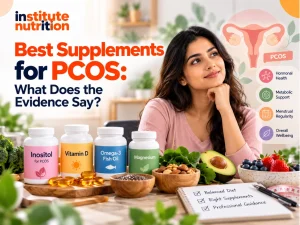
For broader educational guidance, explore PCOS Nutrition Supplements. The goal is to understand nutrition and supplementation choices, not to assume that every person with PCOS needs a supplement.
Can PCOS Be Managed Without Inositol Supplements?
Yes. Inositol is not a compulsory part of PCOS management.
A suitable approach depends on a person’s symptoms, health history, preferences, and goals. It may involve lifestyle support, medical treatment, or a combination of approaches.
Build sustainable eating habits
A balanced eating pattern can provide essential nutrients and support general health.
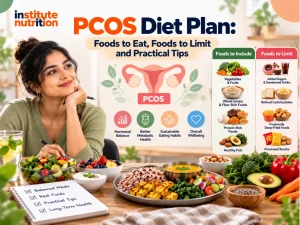
Rather than following a restrictive diet or eliminating entire food groups without a clear reason, focus on meals that include a variety of vegetables, fruits, whole grains, protein sources, and healthy fats according to your individual needs and preferences.
There is no single diet that is best for every person with PCOS.
Include physical activity you can maintain
Regular physical activity can support overall health, fitness, and metabolic well-being.
The right activity depends on your preferences, abilities, schedule, and health circumstances. Consistency is generally more practical than adopting an intense routine that is difficult to maintain.
Prioritize sleep and emotional well-being
Sleep difficulties, stress, and concerns about body image can affect quality of life.
A supportive routine and appropriate professional help may be useful where these concerns are present. PCOS management should not focus solely on body weight or appearance.
Seek individualized medical care
A healthcare professional can assess symptoms, review relevant health risks, and discuss appropriate options.
Depending on individual circumstances, medical care may address menstrual symptoms, metabolic concerns, unwanted hair growth, acne, or fertility goals.
For general information on balanced eating, consult the World Health Organization’s healthy diet guidance.
How Nutrition Education Can Help You Understand PCOS
Nutrition information about PCOS is widely available online, but not every source explains the difference between established evidence, emerging research, and product marketing.
Learning the fundamentals of nutrition can help people evaluate claims more critically, understand why individual needs differ, and recognize when professional assessment is necessary.
For readers interested in structured nutrition learning, Institute Nutrition’s PCOS Nutrition Supplements page is a relevant place to explore further educational information.
Nutrition education can support informed decision-making, but an online course or general nutrition resource should not be treated as a substitute for individualized medical care.
Common Mistakes to Avoid When Taking Inositol for PCOS
A few common mistakes can lead to unrealistic expectations or unnecessary spending.
1. Expecting a cure: Inositol is not a cure for PCOS, and research does not establish that it will resolve every symptom.
2. Copying someone else’s dosage: A dose discussed online may not be appropriate for your circumstances.
3. Combining multiple supplements without checking the ingredients: Products may contain overlapping ingredients, creating unnecessary duplication.
4. Treating supplement advertising as medical evidence: Marketing statements are not a substitute for independent research or professional advice.
5. Using supplements instead of medical assessment: Persistent menstrual irregularity, fertility concerns, or other ongoing symptoms deserve appropriate evaluation.
6. Assuming that a natural product is automatically safe: Natural origin does not guarantee safety, effectiveness, or consistent product quality.
Making an informed decision means considering both the possible benefits and the limitations of the evidence.
Frequently Asked Questions About Inositol for PCOS
1. Does inositol really help with PCOS?
Research suggests that inositol may influence some metabolic measures, but evidence for meaningful clinical benefits remains limited and inconclusive. It should not be expected to work for everyone or improve every PCOS symptom.
2. Which is better for PCOS: myo-inositol or D-chiro-inositol?
Neither form has been established as the best option for everyone with PCOS. Current evidence does not support a universal recommendation for a specific type, dose, or combination.
3. What is the correct dosage of inositol for PCOS?
There is no universally established optimal dose for everyone with PCOS. Discuss the product, formulation, and your individual circumstances with a qualified healthcare professional before starting supplementation.
4. Can inositol regulate periods in PCOS?
Some studies have investigated menstrual and ovulatory outcomes, but the evidence is uncertain. Inositol cannot be relied upon to restore regular periods, and persistent menstrual irregularity should be assessed by a healthcare professional.
5. Can inositol help with PCOS-related infertility?
Evidence concerning ovulation, pregnancy, and live birth remains limited and uncertain. Inositol should not be treated as an established fertility therapy or used instead of appropriate fertility assessment.
6. Can I take inositol with other PCOS supplements?
That depends on the products, their ingredients, your medications, and your health circumstances. Ask a qualified healthcare professional or pharmacist to review the combination before taking multiple supplements.
7. Do all people with PCOS need supplements?
No. Supplement needs vary. Some people may benefit from addressing a confirmed nutrient deficiency or another specific need, while others may not require supplementation. Decisions should be based on individual circumstances and appropriate professional advice.
8. Is inositol a replacement for PCOS medication?
No. Do not stop or replace prescribed medication with a supplement without discussing the decision with your treating healthcare professional.
Final Thoughts: Is Inositol Worth Considering for PCOS?
Inositol is an area of ongoing research in PCOS management, particularly because of its potential relationship with insulin-related pathways. However, the current evidence does not establish a universally effective formulation, an ideal dosage, or consistent benefits across all PCOS symptoms.
The most sensible approach is to avoid miracle claims, understand the limitations of the research, check product quality, and seek professional advice before starting supplementation.
PCOS management is personal. Nutrition, physical activity, medical care, and any decision about supplements should be considered in the context of an individual’s needs and goals.
If you want to explore nutrition education and supplement-related information further, visit Institute Nutrition’s PCOS Nutrition Supplements page.
Medical disclaimer: This article is for general educational purposes only and does not provide medical diagnosis or treatment. Consult a qualified healthcare professional for advice tailored to your health circumstances.