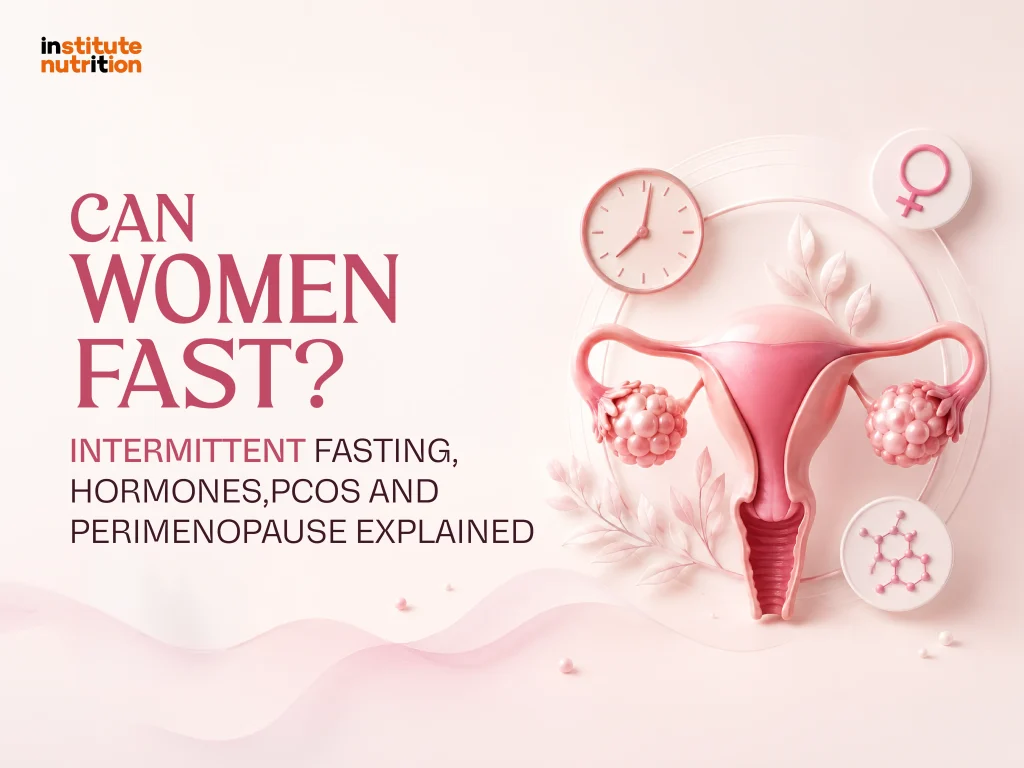
“Should I fast if I have PCOS?” “Is intermittent fasting safe during perimenopause?” “Will fasting mess with my periods?”
If you have looked around for answers to these questions, then you are probably aware of the internet’s endless opinions: half suggesting that fasting will cure your hormones, the other half saying it will ruin them. The truth, as usual, sits somewhere more useful than either extreme.
Fasting Isn’t “Male” or “Female” – But Female Physiology Does Respond Differently
Intermittent fasting for women isn’t fundamentally different in mechanism. All those changes from fed to fasted, the decrease in insulin, increase in glucagon, and the gradual transition from glycogen to fat for fuel, do the same in both sexes.
What differs is the surrounding hormonal environment. Female reproductive hormones, especially estrogen and progesterone, work closely with the same systems that control appetite, insulin sensitivity and stress hormones.
This doesn’t mean fasting is unsafe for women. It simply means that factors like menstrual cycle, stress levels, and overall nutritional status can affect how a woman’s body responds to fasting.
Fasting and the Menstrual Cycle
Across the menstrual cycle, insulin sensitivity, appetite, and energy needs naturally fluctuate. In the luteal phase (the second half of the cycle, after ovulation), many women notice increased hunger and slightly higher energy needs.
This is a normal physiological pattern, not a lack of discipline.
Some women find that a specific daily fast is most appropriate for the entire month. Others are more comfortable with a more flexible plan, shorter eating window in the follicular phase, and slightly more flexibility in the luteal phase.
Neither is inherently “correct.” The right approach is the one that doesn’t leave you undereating, under-fuelled, or constantly fighting your own hunger cues.
Intermittent Fasting and PCOS: What We Actually Know
PCOS (Polycystic Ovary Syndrome) is closely linked to insulin resistance in a large proportion of women who have it. It’s easy to understand why intermittent fasting and PCOS are so often in the same conversation, given the fact that both have an impact on insulin levels and glucose control.
What’s important to keep in mind is that, yes, fasting can be one tool that helps make insulin more sensitive, but not all tools are the same, and it’s not the only lever.
For women who suffer from PCOS, for example, very aggressive or extended fasting routines can have adverse effects, such as higher cortisol, poor sleep, or even overindulgence in the eating window. All of which can negatively affect hormonal balance.
Moderate fasting like a 12-hour overnight fast or a gentle 14:10 window works best with sufficient protein, fibre and a consistent eating plan, as compared to overnight fasting of 16:8 or more.
Fasting During Perimenopause
Perimenopause comes with its own hormonal variations, insulin sensitivity changes, poor sleep and often heightened reactivity to stress.
It is a period during which the body can be more susceptible to physiological stress, and in some cases, extended fasting can be an additional stress on an already stressed body.
This doesn’t mean women in perimenopause should avoid fasting altogether. It means shorter, gentler fasting windows are usually a better starting point than jumping into extended fasts.
Protein and resistance training become even more important during this stage to help preserve muscle mass and support metabolic health.
Signs Fasting May Not Be Working For You
Fasting isn’t right for everyone, and it’s not right at every life stage. Pay attention if you notice:
- Irregular or missed periods after starting a fasting routine
- Persistent fatigue, irritability, or poor sleep
- Constant preoccupation with food or bingeing during the eating window
- Hair thinning, or a noticeable dip in energy or mood
These are signals to loosen the fasting window, increase overall intake, or step back and reassess, not signs to push through.
The Bottom Line
Women absolutely can fast, but female hormonal health and fasting work best together when the approach is individualised, not borrowed from a trend or a friend’s results.
The ability of a fasting protocol to assist or hinder the body depends on the individual’s cycle phase, PCOS status, life stage, stress, and nutritional status.
As with every nutrition strategy, the most effective approach isn’t the most extreme one; it’s the one your body can sustain without sacrificing your hormones, your energy, or your relationship with food.
Want to Understand the Science Behind Fasting?
Want to understand the science behind fasting in far more depth?
Our course, Fasting and Human Energy Management: Foundations and Mechanisms, walks through the physiology, hormonal adaptations, and evidence-based application of fasting, including how to personalise protocols for real client scenarios.
Explore the course here: Explore the Course
Disclaimer: This article is for educational purposes and isn’t a substitute for personalised medical or nutritional advice. If you have PCOS, are in perimenopause, or have a history of hormonal or menstrual irregularities, consult a healthcare professional before starting any fasting protocol.
FAQs
1. Is intermittent fasting safe for women with PCOS?
For a large number of women struggling with PCOS, a moderate fasting window may be sufficient to help improve insulin sensitivity when combined with sufficient protein and fibre in the diet.
However, aggressive or prolonged fasting can raise physiological stress and may worsen hormonal or energy-related symptoms in some individuals. The protocol needs to fit the individual rather than follow a generic 16:8 template.
2. Does intermittent fasting affect your menstrual cycle?
It may, especially when the fasting window is too long, calories are too sparse, or fasting is coupled with stress or heavy exercise.
Irregular or missed periods after starting a fasting routine are a signal to loosen the window and increase overall intake, not a sign to push through.
3. Can I fast during perimenopause?
Yes, but shorter and less intense fasts are typically easier to stick to than longer fasts during perimenopause, when hormonal fluctuations, sleep disruption and stress can already be challenging.
Prioritising protein and resistance training alongside fasting becomes especially important at this stage.
4. How do I know if fasting isn’t working for my hormones?
Watch for irregular periods, persistent fatigue, poor sleep, constant food preoccupation or bingeing, and dips in mood or energy.
These signs point to reassessing the approach rather than trying a longer or stricter fast.