Choosing the right dietitian course online can feel confusing when so many programs promise to help you build a career in nutrition. Some courses focus on the fundamentals of nutrition, while others offer specialised education, assessments, or certificates of completion. Understanding these differences before enrolling can help you make a more informed decision.
Whether you are exploring nutrition as a new field, looking to expand your existing knowledge, or researching a future career in dietetics, the first step is understanding what you want to achieve.
In this guide, you will learn how to compare online dietitian courses, evaluate their curriculum and credentials, understand qualification requirements in India, and identify a learning pathway that matches your goals.
What Is a Dietitian Course Online?
A dietitian course online is an educational program delivered partly or entirely through an online learning platform. Depending on the provider, it may cover nutrition fundamentals, food science, dietary assessment, meal planning, or other nutrition-related subjects.
However, not every online nutrition course is a professional dietetics qualification.
Some programs are intended to introduce learners to nutrition, while others form part of a more structured academic or professional pathway. The distinction matters because completing a short online course does not automatically qualify someone to practise as a dietitian.
Before choosing a program, identify whether you want introductory nutrition education, professional development, or a qualification that meets the requirements of a particular career.
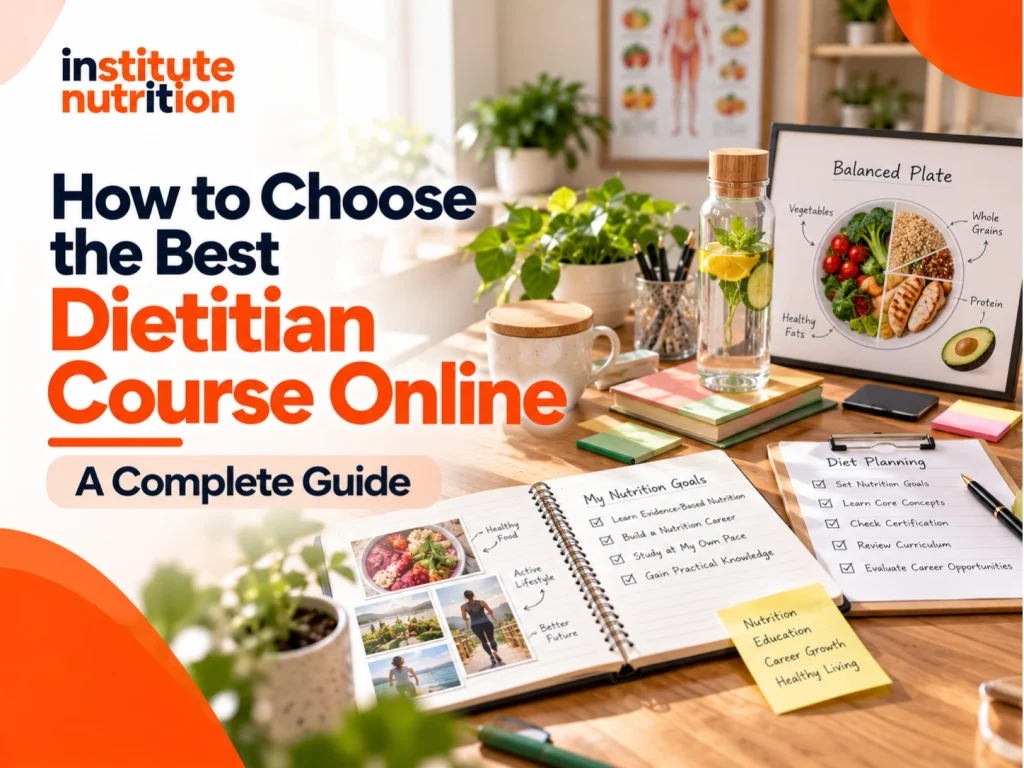
How to Choose the Best Dietitian Course Online
The best course for you is not necessarily the most expensive or the one with the most impressive marketing. It is the program whose content, teaching approach, credentials, and learning outcomes match your needs.
Here are seven important factors to consider.
1. Understand Your Career and Learning Goals
Before comparing courses, decide why you want to study nutrition.
You might want to understand healthy eating, explore nutrition education, develop knowledge relevant to fitness, or pursue a formal career in dietetics.
Your goal will influence the type of course you need.
For example:
- Foundational nutrition knowledge: Look for a course that explains nutrients, digestion, food groups, and balanced eating.
- Nutrition education: Consider programs that teach core nutrition concepts and how to communicate them responsibly.
- Sports nutrition: Explore specialised programs that explain the relationship between nutrition, physical activity, and recovery.
- Clinical nutrition: Look for education appropriate to your background and intended professional pathway.
- Professional dietetics: Research the formal academic qualifications and practical training required for the role you intend to pursue.
Being clear about your objective helps you avoid paying for a course that does not support your intended outcome.
2. Review the Course Curriculum Carefully
The curriculum tells you what you will actually learn. It is more useful than relying on a course title alone.
Depending on the level and purpose of the program, relevant subjects may include:
- Macronutrients and micronutrients.
- Digestion and nutrient absorption.
- Food science and nutritional requirements.
- Balanced diets and dietary patterns.
- Food labels and nutritional information.
- Fundamentals of dietary assessment.
- Introduction to clinical or sports nutrition, where relevant.
Check whether the syllabus explains the learning outcomes for each module. Also look at the teaching format, assessment methods, and opportunities to apply the material.
If your goal is to enter a regulated professional pathway, compare the syllabus with the formal requirements for that pathway. A course that teaches useful nutrition concepts may still not provide the qualifications needed for professional practice.
3. Verify the Instructor’s Qualifications
An instructor’s background can help you assess the credibility and suitability of a course.
Look for information about their education, relevant professional experience, and expertise in the subjects being taught.
If a course focuses on clinical nutrition or dietetics, check whether the instructor has suitable qualifications and experience in that area.
You can also look for:
- A transparent instructor biography.
- Relevant academic or professional credentials.
- Clearly described teaching responsibilities.
- Reliable educational references.
- Contact or support information for learners.
Do not rely solely on promotional claims. Where professional qualifications are important to your decision, verify them through the relevant institution or professional organisation.
4. Understand the Certificate and Its Recognition
The word certification can mean different things depending on the course provider.
Some programs issue a certificate of completion after learners finish their lessons or assessments. Other qualifications may be part of a formal academic pathway or recognised by a relevant professional organisation.
Before enrolling, ask:
- Who issues the certificate?
- What must you complete to receive it?
- Is the course assessed?
- Is any professional recognition claimed?
- Does the qualification meet the requirements of your intended role?
- Will you need additional academic study or supervised training?
In India, the Indian Dietetic Association’s Registered Dietitian eligibility information provides a useful reference for understanding its stated eligibility pathway, including relevant academic qualifications and practical training requirements.
Review the current criteria directly and confirm whether they apply to your intended professional pathway.
Important: Do not assume that a certificate from a short online course automatically qualifies you as a registered dietitian or makes you eligible to provide regulated clinical services.
5. Compare Online Learning Formats
Online learning can be useful if you are balancing your studies with work or other responsibilities. However, course formats and access conditions differ between providers.
Before enrolling, check whether the course offers:
- Recorded lessons or scheduled classes.
- A clear module structure.
- Downloadable learning materials.
- Quizzes or assessments.
- Instructor support.
- Flexible study hours.
- A defined period of course access.
Think about how you learn best. If you prefer studying at your own pace, a self-paced program may be convenient. If you need regular feedback, look for a course that clearly explains what support is available.
Also check the course completion requirements and whether the advertised price includes all learning materials and certificate-related charges.
6. Evaluate Practical Learning Opportunities
Nutrition is an applied subject, so understanding how to use information responsibly is important.
Depending on the course, useful learning activities may include food-label interpretation, dietary case studies, nutrition calculations, or exercises that explain balanced meal planning.
Review the actual curriculum rather than assuming that a course includes practical training.
For people pursuing clinical or professional dietetics, online lessons alone may not satisfy the supervised practice or other requirements of the intended qualification.
Ask the provider what practical components are included and what additional education or training you may need.
7. Compare Course Fees and Overall Value
Online nutrition courses vary in price according to their curriculum, duration, teaching format, instructor expertise, assessments, and credentials.
Instead of choosing a course based only on its price, compare what you receive.
| Factor | What to check |
|---|---|
| Curriculum | Are the topics relevant to your learning goals? |
| Duration | How long will the course take to complete? |
| Learning materials | Are lessons, notes, and other resources included? |
| Assessments | Are quizzes, assignments, or examinations provided? |
| Instructor support | What assistance is available to learners? |
| Certificate | What certificate is awarded, and who issues it? |
| Additional costs | Are there separate fees for assessments or certificates? |
| Professional pathway | Does the course meet the requirements you need? |
A course offers better value when its learning outcomes match your needs and its claims are transparent.
Before paying, review the provider’s current course details, payment terms, and refund policy where applicable.
How to Check Whether a Dietitian Course Is Suitable in India
If you intend to study or work in India, do not assume that a course recognised in one context will automatically meet the requirements of every employer, institution, or professional organisation.
Start by identifying your intended role and checking the relevant qualification pathway.
For academic programs delivered through recognised higher-education institutions, the University Grants Commission provides information about universities and higher-education recognition. For distance or online higher education, check the applicable program and academic-session requirements rather than relying on an institution’s name alone.
For a dietetics-related professional pathway, consult the relevant professional organisation and verify its current eligibility criteria.
A short online course may be useful for learning, but it should not be presented as a substitute for qualifications or supervised training that a professional role requires.
Online Dietitian Course vs Classroom Course
Both online and classroom learning have potential advantages. The right option depends on your learning preferences, course content, and intended qualification.
| Factor | Online learning | Classroom learning |
|---|---|---|
| Schedule | May offer self-paced or scheduled lessons | Often follows a fixed timetable |
| Location | Can be accessed remotely | Requires attendance at the relevant location |
| Learning materials | May include recorded lessons and digital resources | May include in-person teaching and physical resources |
| Interaction | Depends on available online support | May allow direct interaction with instructors and classmates |
| Practical training | Depends on the course design and any separate placements | Depends on the institution and program |
| Professional eligibility | Must be checked against the intended pathway | Must also be checked against the intended pathway |
Neither format automatically guarantees a better qualification. What matters is whether the program provides the education, assessments, and practical training required for your goal.
What Should You Do Before Enrolling?
Before making your final decision, use this checklist:
- Define your learning or career objective.
- Read the full syllabus.
- Check the instructor’s qualifications.
- Verify what certificate is awarded.
- Confirm any professional recognition claims.
- Check course fees and access conditions.
- Understand whether practical training is included.
- Research additional qualifications required for your intended role.
- Review the provider’s terms before paying.
- Keep a copy of the course details and enrolment conditions.
Taking these steps can help you choose a program based on evidence rather than marketing promises.
Exploring Dietitian Course Online Options
Once you understand what to look for, you can begin comparing programs that match your goals.
If you are researching online nutrition education, explore the Dietitian Course Online page from Institute Nutrition. Review the published curriculum, course format, entry requirements, instructor information, and certificate details before deciding whether the program is suitable for you.
If you want to compare other learning options, you can also visit Institute Nutrition to explore the available nutrition education programs.
Make your decision based on the actual program information and the qualifications required for your intended career.
Frequently Asked Questions
1. How do I choose the best dietitian course online?
Start by identifying your goal. Compare the syllabus, instructor qualifications, learning format, assessments, fees, certificate details, and any relevant professional requirements. If you intend to become a practising dietitian, verify that the course fits the required qualification pathway.
2. Can I become a dietitian by completing an online course?
Not necessarily. A short online course may teach useful nutrition concepts, but professional dietetics pathways may require specific academic qualifications and supervised practical training. Check the requirements that apply to your intended role and location.
3. Are online dietitian certificates recognised in India?
Recognition depends on the course, the organisation issuing the certificate, and the requirements of the institution or professional body evaluating it. Verify any recognition claims directly before enrolling.
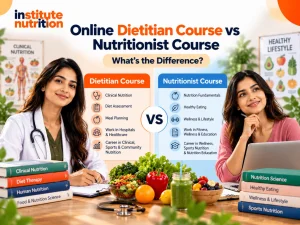
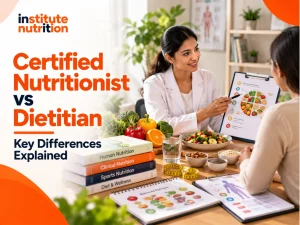
4. What is the difference between a nutritionist course and a dietitian course?
The terms and their professional implications vary by context. A nutritionist course may focus on general nutrition knowledge, while a dietetics qualification may form part of a more structured pathway involving academic study and practical training. Check the curriculum and professional requirements rather than relying on the course title alone.
5. Do I need a science background to study nutrition online?
Entry requirements depend on the course. Some introductory programs may accept learners from different educational backgrounds, while formal academic or professional pathways may require specific prior qualifications.
6. How much does an online dietitian course cost?
Fees vary according to the provider, curriculum, duration, learning materials, assessments, and certificate offered. Check the current course fee and any additional charges directly with the provider.
7. What should I check before paying for an online nutrition course?
Verify the syllabus, instructor qualifications, certificate details, total cost, access period, assessment requirements, refund terms, and professional recognition claims. Keep a copy of the course information available at the time of enrolment.
Conclusion
Choosing the best dietitian course online begins with understanding your goals and checking whether a program genuinely meets them.
Compare the curriculum, instructor credentials, teaching format, assessments, fees, and certificate details. If you want to pursue professional dietetics, investigate the relevant academic and practical training requirements before enrolling.
A thoughtful decision can help you invest your time and money in education that supports your next step.
To explore available learning options, visit the Dietitian Course Online page and review the program details carefully.