Choosing between becoming a nutritionist and a dietitian can be confusing, especially when you are just starting to explore nutrition as a career. Both fields focus on the relationship between food, nutrition, and health, but their education pathways, professional responsibilities, and qualification requirements can differ.
If you are interested in studying nutrition, understanding these differences can help you choose an educational pathway that matches your interests and long-term goals.
In this guide, we explain the differences between nutritionists and dietitians, the qualifications to consider, and how to decide which direction is right for you.
What Is a Nutritionist?
A nutritionist studies how food and nutrients relate to health, wellbeing, and everyday dietary habits. Depending on their qualifications and professional scope, nutritionists may work in nutrition education, wellness, food-related communication, research, or other nutrition-related fields.
Their work may involve explaining balanced eating principles, helping people understand food choices, and sharing evidence-based nutrition information.
Nutritionists can pursue different areas of interest, including:
- General nutrition education.
- Sports and fitness nutrition.
- Public health nutrition.
- Nutrition communication and content development.
- Further study in specialised areas of nutrition.
However, the term nutritionist does not represent the same qualification or legal status in every country. A short course certificate does not automatically qualify someone to provide clinical care or practise in a regulated professional role.
If you want to build your foundational knowledge, explore the Certified Nutritionist Course and review its curriculum, entry requirements, and certificate details before enrolling.
What Is a Dietitian?
A dietitian is a nutrition professional whose education and training generally prepare them for more specialised work involving dietary assessment, nutrition care, and the relationship between diet and health conditions.
Depending on the country and the relevant qualification or registration requirements, dietitians may work in hospitals, clinics, community health programs, research, food services, and other healthcare-related settings.
Their responsibilities may include:
- Assessing nutritional needs within their professional scope.
- Supporting appropriate dietary planning.
- Contributing to nutrition care for people with health conditions.
- Educating patients about nutrition and dietary management.
- Working with other healthcare professionals.
The exact responsibilities and legal requirements vary by location. Anyone planning to pursue dietetics should check the current qualification and registration requirements applicable to their intended place of practice.
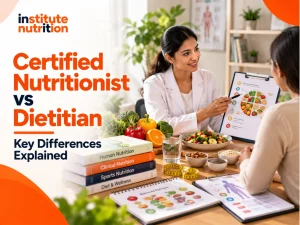
Certified Nutritionist vs Dietitian: Key Differences
Although nutritionists and dietitians both study nutrition, their qualifications and professional responsibilities may differ.
| Comparison | Nutritionist | Dietitian |
|---|---|---|
| Main focus | Nutrition knowledge, education, and other work within their qualifications | Nutrition assessment and care within their professional scope |
| Education pathway | Varies according to the role and country | Often involves specific academic and supervised training requirements |
| Certification | Depends on the course and issuing organisation | Depends on the relevant professional qualification and local requirements |
| Clinical responsibilities | Limited by qualifications and applicable regulations | May include clinical nutrition care when appropriately qualified |
| Work settings | May include wellness, education, food-related communication, and other nutrition fields | May include hospitals, clinics, community health, and other settings |
| Professional recognition | Varies by qualification and jurisdiction | Depends on the applicable qualification, registration, or professional framework |
Important: This table provides a general comparison. It should not be used as a substitute for checking the requirements of a specific profession in a particular country.
What Qualifications Do You Need to Become a Nutritionist?
The qualifications you need depend on the type of work you want to pursue.
If your goal is to develop a foundation in nutrition, you can begin by studying subjects such as nutrients, digestion, balanced diets, food labels, and healthy eating principles.
When comparing courses, consider the following factors.
1. Course Curriculum
Review the syllabus to understand the subjects covered and whether the course matches your current knowledge and learning goals.
2. Instructor Qualifications
Look for transparent information about the instructor’s educational background and relevant professional experience.
3. Certificate Details
Check which organisation issues the certificate, what completion requirements apply, and whether any professional recognition is claimed.
4. Practical Learning
Consider whether the course includes assessments, case studies, or other activities that help you apply what you learn.
5. Further Education Requirements
If you want to pursue a regulated profession, research the formal qualifications and registration requirements before enrolling in a short online course.
You can also explore the broader range of online nutrition courses to compare learning options according to your interests.
What Qualifications Do You Need to Become a Dietitian?
Dietitian qualification pathways are often more structured than introductory nutrition education.
Depending on the country, the pathway may require an appropriate academic degree, supervised practical training, examinations, registration, or other professional requirements.
Before choosing a course, identify where you intend to practise and check the requirements of the relevant government regulator or professional body.
Do not assume that completing a general nutrition certificate automatically meets dietitian qualification requirements.
If your long-term goal is to work in clinical settings, understanding these requirements early can help you avoid investing time and money in a course that does not meet your needs.
Can You Become a Nutritionist Through an Online Course?
Online learning can be a convenient way to develop nutrition knowledge, especially if you are balancing education, employment, or other responsibilities.
Depending on the provider, online courses may include recorded lessons, digital learning materials, quizzes, assessments, and flexible study schedules.
Before enrolling, check:
- The course syllabus and learning objectives.
- The instructor’s qualifications.
- The course duration and access conditions.
- The assessment and certificate requirements.
- Any professional recognition claims.
- Whether additional qualifications are required for your intended career.
An online course may be useful for foundational learning, but it does not automatically replace the academic or supervised training required for certain professional roles.
Nutritionist vs Dietitian: Which Career Should You Choose?
The right pathway depends on your interests, educational background, and long-term plans.
Consider Nutrition Education if You Want to:
- Develop a foundation in nutrition science.
- Learn more about balanced eating and healthy dietary habits.
- Explore nutrition communication or educational content.
- Investigate relevant wellness-related opportunities within your qualifications.
- Continue studying specialised nutrition subjects.
Consider the Dietetics Pathway if You Want to:
- Explore a profession involving structured nutrition assessment and care.
- Work towards roles in clinical or healthcare settings.
- Study the relationship between nutrition and medical conditions.
- Complete the formal qualifications and training required for professional practice.
These are general considerations rather than fixed career boundaries. The actual opportunities available depend on your qualifications and the rules applicable to your intended role.
How to Choose the Right Nutrition Course
Once you understand the difference between nutritionists and dietitians, your next step is to identify the education pathway that matches your goal.
Before making a decision, ask yourself:
- Do I want to learn nutrition for personal knowledge or professional development?
- Am I interested in general nutrition, sports nutrition, or clinical nutrition?
- What qualifications does my intended career require?
- Does the course curriculum match those requirements?
- What certificate will I receive?
- Will I need further education or supervised training?
Comparing these factors can help you make a more informed decision.
If you are exploring foundational nutrition education, visit the Certified Nutritionist Course page to review the available course information and determine whether it aligns with your learning objectives.
Why Evidence-Based Nutrition Education Matters
Nutrition information is widely available online, but not every claim is reliable.
A strong foundation in nutrition includes learning how to distinguish credible scientific evidence from unsupported claims, exaggerated promises, and popular diet trends.
The World Health Organization provides guidance on the principles of a healthy diet, including the importance of dietary balance, variety, and appropriate food choices.
When studying nutrition, use credible sources and recognise the limits of your qualifications. People with medical conditions or complex dietary needs may require advice from an appropriately qualified healthcare professional.
Frequently Asked Questions
1. Is a nutritionist the same as a dietitian?
No, the terms may refer to different qualifications and professional responsibilities. Their exact meanings depend on the country and applicable regulations.
2. Can a certified nutritionist work in a hospital?
That depends on the person’s qualifications, the role, and the requirements of the healthcare facility. A short nutrition certificate does not automatically qualify someone for a clinical position.
3. Can I become a nutritionist without a medical degree?
Some nutrition-related educational pathways do not require a medical degree. However, entry requirements and professional eligibility vary according to the course and the role you want to pursue.
4. Does an online nutrition certificate qualify me as a dietitian?
Not automatically. Dietitian practice may require specific academic qualifications, supervised training, registration, or other requirements depending on the jurisdiction.
5. What should I check before choosing a certified nutritionist course?
Review the curriculum, instructor qualifications, certificate details, course duration, assessments, fees, and any professional recognition claims. Confirm whether additional qualifications are required for your intended career.
6. Which is better: a nutritionist course or a dietitian qualification?
Neither is universally better. The right choice depends on your goals. A foundational nutrition course may suit someone seeking nutrition knowledge, while a dietetics career generally requires following the applicable formal qualification pathway.
Conclusion
Nutritionists and dietitians both contribute to nutrition-related education and health, but their qualifications, professional responsibilities, and career pathways can differ.
Before enrolling in a course, consider your interests, review the relevant professional requirements, and verify the certificate or qualification being offered.
Building a strong foundation in nutrition starts with choosing an educational pathway that matches your goals and understanding what further learning may be necessary.
If you want to explore nutrition education options, visit Institute Nutrition and review the available courses to find a program that fits your learning objectives.