Have you ever wondered how the food you eat affects your health? Nutrition plays an important role in energy levels, recovery, and the management of certain health conditions. When general dietary advice is not enough, a more personalized approach may be helpful. This is where medical nutrition therapy comes in.
Medical nutrition therapy uses nutrition assessment and individualized dietary strategies to support health needs. It considers a person’s health history, eating habits, lifestyle, and goals rather than recommending the same diet to everyone.
What Is Medical Nutrition Therapy?
Medical nutrition therapy (MNT) is a structured approach to nutrition care that helps address specific health concerns through personalized dietary planning. It is commonly used alongside medical care to support people living with conditions that may benefit from nutrition management.
Instead of following popular diet trends or making sudden food restrictions, individuals receive guidance based on their needs and professional assessment.
The goal is to help people make informed food choices, develop sustainable habits, and support their overall well-being. MNT should be provided by appropriately qualified healthcare and nutrition professionals.
How Does Medical Nutrition Therapy Work?
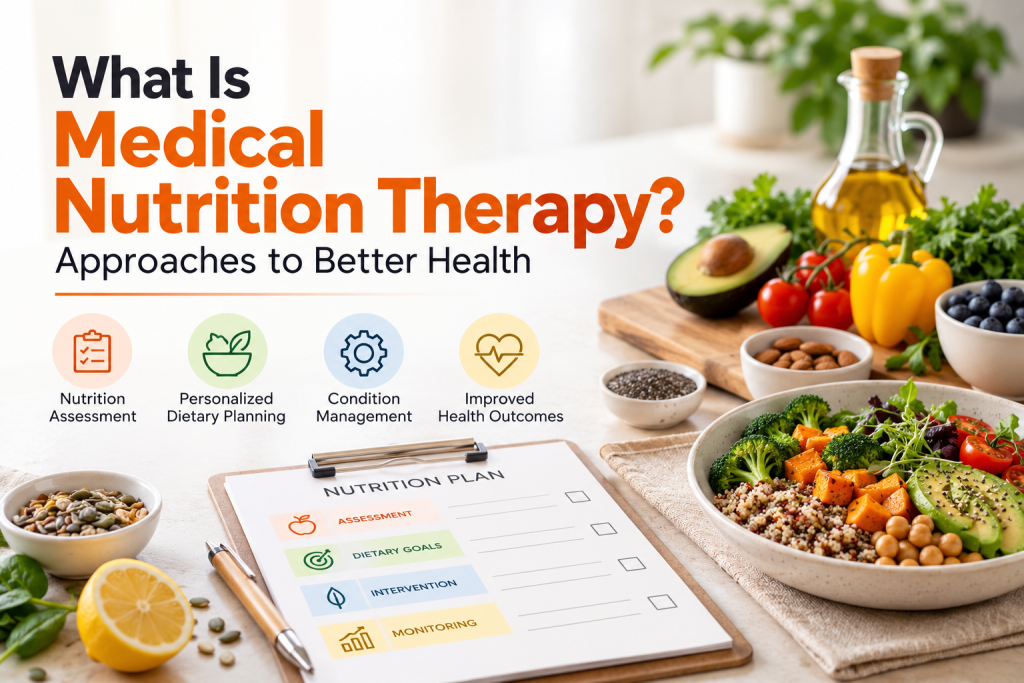
The process depends on the individual’s health needs and circumstances. It generally includes the following steps.
1. Nutrition Assessment
The professional reviews relevant health information, dietary habits, lifestyle, and nutrition goals. Medical history and relevant test results may also be considered when appropriate.
2. Personalized Dietary Planning
Based on the assessment, a suitable nutrition plan may be developed. It can consider meal timing, portion sizes, nutrient intake, food preferences, cultural habits, and daily routines.
3. Practical Nutrition Guidance
People receive advice on making realistic food choices, planning balanced meals, and building habits they can maintain over time.
4. Monitoring and Follow-Up
Progress is reviewed, and the plan may be adjusted according to changing needs, individual responses, and professional recommendations.
Why Is Medical Nutrition Therapy Important?
Food choices can influence several aspects of health. A personalized approach helps people understand how nutrition fits into their broader healthcare plan.
Potential benefits may include:
- Better dietary habits: Build a balanced eating routine suited to your needs.
- Support for health management: Use appropriate nutrition strategies alongside medical treatment.
- Improved nutritional intake: Identify potential gaps and make informed food choices.
- Sustainable lifestyle changes: Focus on practical habits rather than restrictive, short-term diets.
- Ongoing guidance: Review progress and adjust dietary strategies when necessary.
Results vary depending on the individual, the condition, and the overall treatment plan. Nutrition care is not a replacement for medical diagnosis or prescribed treatment.
Which Health Conditions May Benefit From Nutrition Care?
Medical nutrition therapy may form part of the care plan for several conditions, depending on individual circumstances and professional assessment.
Diabetes and Blood Sugar Management
Nutrition guidance can help people understand carbohydrate intake, meal balance, and eating patterns as part of an overall diabetes management plan.
Heart Health
Appropriate dietary strategies may focus on fibre, healthy fats, sodium intake, and balanced food choices to support cardiovascular health.
Kidney Conditions
People with kidney disease may require individualized guidance on nutrients such as sodium, potassium, phosphorus, protein, and fluids. Recommendations depend on the person’s condition and clinical needs.
Digestive and Nutritional Concerns
Some digestive conditions and nutrient deficiencies may require specific dietary assessment and carefully planned changes.
Weight Management
Personalized nutrition can support sustainable eating habits and weight-related goals while taking health, lifestyle, and nutritional requirements into account.
Important: Anyone managing a medical condition should consult an appropriately qualified healthcare professional before making significant dietary changes.
Medical Nutrition Therapy vs. General Nutrition Advice
Both approaches can help people make healthier food choices, but their purposes may differ.
| General Nutrition Advice | Medical Nutrition Therapy |
|---|---|
| Focuses on healthy eating habits | Addresses specific nutrition-related health needs |
| Offers broad dietary guidance | Uses an individualized nutrition assessment |
| May support general wellness goals | May form part of a broader healthcare plan |
| Often emphasizes everyday food choices | May require monitoring and professional follow-up |
The appropriate approach depends on a person’s health status, goals, and need for professional care.
Who Provides Medical Nutrition Therapy?
Medical nutrition therapy should be delivered by appropriately qualified professionals working within their scope of practice. Depending on the setting and local regulations, this may include registered dietitians and other qualified healthcare professionals with relevant nutrition expertise.
These professionals assess nutritional needs, develop suitable strategies, monitor progress, and coordinate with other healthcare providers when necessary.
People interested in this field should understand the difference between general nutrition education and the qualifications required to provide clinical nutrition care.
What Skills Are Important in Clinical Nutrition?
Clinical nutrition involves more than knowing which foods contain particular nutrients. It requires an understanding of how dietary choices relate to health, how to interpret relevant nutrition information, and how to communicate practical recommendations.
Important areas of knowledge include:
- Human nutrition and nutrient requirements
- Nutrition assessment and dietary planning
- The relationship between nutrition and health conditions
- Evidence-based decision-making
- Ethical practice and professional boundaries
- Communication and individualized guidance
Structured education can help learners build a foundation in these areas, depending on the curriculum and qualification offered.
If you want to develop your understanding of this subject, explore the Clinical Nutrition Course at Institute Nutrition to learn more about the course content and learning opportunities.
How Can Personalized Nutrition Support Your Health Goals?
A useful nutrition plan should consider your individual needs rather than relying on one-size-fits-all rules. Age, lifestyle, food preferences, health history, and activity levels can all influence dietary requirements.
For example, someone managing blood sugar may need different dietary guidance from an athlete focusing on recovery or a person addressing a nutritional deficiency.
Nutrition professionals such as Ryan Fernando provide information and services related to personalized nutrition and medical nutrition. Exploring reputable nutrition resources can help readers understand the different approaches available and the importance of qualified guidance.
Before following a specific plan, make sure the recommendations suit your circumstances and consult a qualified professional when you have a medical concern.
Frequently Asked Questions
What is medical nutrition therapy in simple terms?
It is a personalized approach to nutrition care that uses dietary assessment and tailored strategies to support specific health needs, often alongside medical treatment.
Is medical nutrition therapy the same as a diet plan?
Not exactly. A general diet plan may focus on everyday eating or weight goals, while medical nutrition therapy addresses specific nutrition-related health needs and may involve professional assessment and follow-up.
Can medical nutrition therapy help with diabetes?
It can be part of diabetes care by supporting appropriate meal planning and dietary habits. Individual recommendations should be developed with qualified healthcare professionals and coordinated with the person’s treatment plan.
Who can provide medical nutrition therapy?
It should be provided by appropriately qualified professionals who are authorized to deliver nutrition care within their scope of practice and local regulations.
How can I learn more about clinical nutrition?
You can explore relevant nutrition education, study the relationship between diet and health, and review structured learning options such as the Clinical Nutrition Course at Institute Nutrition.
Conclusion
Medical nutrition therapy offers a structured way to understand how dietary choices can support individual health needs. Through assessment, personalized planning, and appropriate follow-up, it can form a valuable part of care for people with specific nutrition-related concerns.
Whether you are looking for reliable information to make better food choices or considering learning more about clinical nutrition, focus on evidence-based guidance and advice from qualified professionals.
Interested in learning more about clinical nutrition? Explore the Clinical Nutrition Course at Institute Nutrition to review the course details and see whether it aligns with your learning goals.