
How to Read a Blood Report: A Practical Guide for Nutrition Professionals
Blood reports are a routine part of health assessment, but understanding what the numbers mean—and how they relate to a […]
-
 -by Tushita Jain
- 189 Students
- Last updated
Course Description
what the numbers mean—and how they relate to a client’s nutrition—is a
skill that takes practice.In this course, you’ll learn how to interpret common blood investigations,
recognise meaningful patterns, and connect the findings with a client’s
symptoms, diet, and health history. We’ll cover CBC, blood glucose and
HbA1c, lipid profile, liver and kidney function, micronutrient status,
thyroid and other hormones, women’s health markers, and inflammatory
markers.The focus is on practical interpretation, not memorising reference ranges.
Through real-world examples, you’ll learn what an abnormal result may
indicate, which nutrition factors are relevant, what can be addressed
through food and lifestyle, and when further medical evaluation or
referral is needed.
What You’ll Learn
- Read and interpret commonly used blood tests.
- Recognise patterns in anaemia, blood glucose, and lipid markers.
- Understand liver and kidney function tests.
- Interpret iron studies and key vitamin and mineral markers.
- Understand thyroid, endocrine, and women’s health hormone results.
- Make sense of inflammatory markers and their limitations.
- Connect lab findings with dietary assessment and practical nutrition strategies.
- Identify findings that need medical evaluation or referral.
Who Should Take This Course?
- Nutritionists and dietitians.
- Doctors and healthcare professionals.
- Health and wellness coaches.
- Nutrition students and professionals looking to strengthen their lab interpretation skills.
Course Approach
The course combines scientific understanding with practical examples to
help you build a structured approach to blood report interpretation.
It supports nutrition assessment and counselling, while recognising
that laboratory findings must be interpreted in clinical context and
do not replace medical diagnosis.
Instructor
Tushita Jain
Lead Nutrition Educator, Institute Nutrition
Curriculum
- 1 Section
- 10 Lessons
- 3 Weeks
Expand all sectionsCollapse all sections
Your Instructors

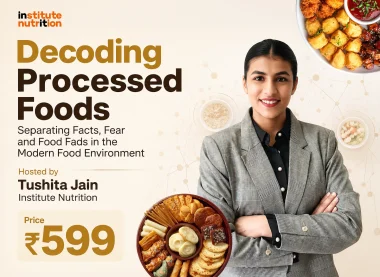
Decoding Processed Foods
Separating Facts, Fear and Food Fads in the Modern Food Environment Course Description A practical masterclass that helps you understand processed, minimally processed and ultra-processed foods through science, food.

Hairfall Control Course: Science-Backed Nutrition & Solutions
Struggling with hair fall despite normal blood work, balanced stress, and good habits? Often, hair fall is the last sign your body shows after months of nutritional gaps. This.

My First Period
Prepare your daughter for her first period with confidence and care. Designed for parents by India’s leading nutritionist, this course offers a science-backed, practical guide to navigate this milestone..

Optimize and boost your immunity in 21-days
Human health comprises of physical, emotional, intellectual, and spiritual health all working together in complete harmony. This course consists of 7 modules that cover everything from the immune system and balanced.

GUT HEALTH: Secret Prescription Foods and Supplements
Gut Health | Clinical Management | Healthy eating | Supplements | Probiotics | Lifestyle Gut is the origin of all diseases, rightly said by Hippocrates! Take care of your.