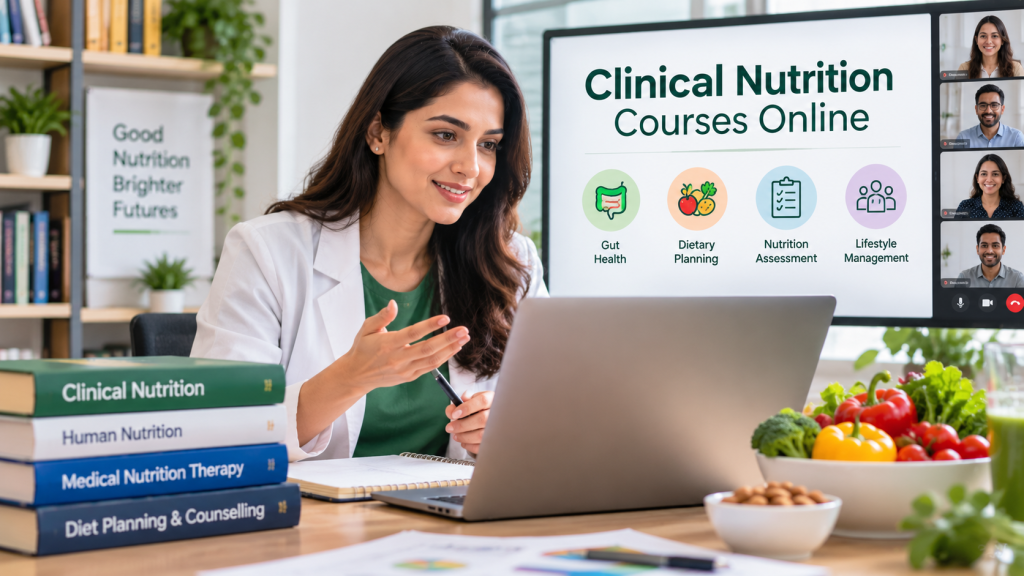
Are you looking to build your knowledge of nutrition and explore new learning opportunities? Clinical nutrition courses online can help you understand how nutrition relates to health, dietary requirements, and healthcare. Choosing the right programme is an important first step towards developing your knowledge and planning your future.
With different courses available, it is important to look beyond the course name. The curriculum, teaching format, instructor expertise, certificate, and learning objectives can all influence whether a programme meets your expectations.
This guide explains what to look for when comparing online courses, the subjects worth exploring, and how to select a learning option that aligns with your goals.
Why Choose Clinical Nutrition Courses Online?
Online learning gives students and working professionals an opportunity to study without necessarily attending a physical classroom. Depending on the provider, lessons may include recorded videos, live classes, assignments, reading materials, and assessments.
Here are some reasons to consider online nutrition education.
Learn at a Flexible Pace
Some programmes allow you to study at your own pace, making it easier to balance learning with work or personal commitments. Before enrolling, check whether the course has fixed class times, deadlines, or a limited access period.
Build a Foundation in Nutrition
A structured programme can introduce you to important nutrition concepts, including nutrient requirements, dietary planning, and the relationship between food and health.
Explore a Specialized Subject
Clinical nutrition education may help learners explore how nutrition is considered in healthcare settings. The depth of study depends on the course level and curriculum.
Make an Informed Education Decision
Reviewing course details before enrolling helps you understand what you will learn, what certificate you may receive, and whether the programme suits your intended academic or professional pathway.
What Will You Learn in an Online Clinical Nutrition Course?
The subjects covered vary by provider, so always review the actual syllabus before choosing a programme. Relevant areas of study may include the following.
Fundamentals of Human Nutrition
Learn about carbohydrates, proteins, fats, vitamins, minerals, water, and their roles in the body. These concepts provide a foundation for understanding balanced dietary patterns and nutritional requirements.
Nutritional Requirements Across Life Stages
Nutrition needs can change throughout life. Depending on the curriculum, learners may explore nutrition during childhood, adolescence, adulthood, pregnancy, and older age.
Nutrition Assessment Principles
Nutrition assessment involves gathering relevant information about dietary intake, health, lifestyle, and nutritional needs. Understanding these principles helps learners appreciate how nutrition requirements can differ from person to person.
Dietary Planning and Food Choices
Explore how food preferences, daily routines, cultural practices, and nutritional requirements can influence meal planning.
Nutrition and Health Conditions
Some clinical nutrition programmes introduce the relationship between dietary choices and conditions such as diabetes and cardiovascular disease. The scope of this content depends on the course, and providing clinical care requires appropriate professional qualifications.
Evidence-Based Nutrition
Learning to evaluate nutrition information is important in a world full of conflicting dietary advice. Understanding research quality and recognizing unsupported health claims can help learners make better-informed decisions.
How to Choose the Best Clinical Nutrition Course Online
Not every course is suitable for every learner. Use these factors to compare your options before making a decision.
1. Review the Curriculum
Look for a syllabus that clearly explains the topics, learning objectives, and expected outcomes. Make sure the content matches your current knowledge and interests.
2. Check the Course Level
Some courses are intended for beginners, while others require previous education or professional experience. Confirm the entry requirements before enrolling.
3. Understand the Teaching Format
Find out whether lessons are live, recorded, self-paced, or delivered through a combination of formats. Choose an approach that works with your schedule and preferred learning style.
4. Evaluate Instructor Expertise
Check whether the provider shares information about instructors’ qualifications and relevant experience. Clear information about teaching staff can help you assess the programme’s credibility.
5. Verify the Certificate
Ask what certificate or qualification is awarded upon completion. If accreditation or professional recognition is advertised, verify the claim with the relevant organization.
A course completion certificate does not automatically qualify someone to work as a registered dietitian or provide regulated clinical services.
6. Compare Fees and Support
Review the total cost, payment conditions, course duration, access period, assessment requirements, and available student support. Consider the overall value rather than choosing based on price alone.
Online Nutrition Education and Professional Development
If you are interested in nutrition as a potential career direction, understanding the professional landscape is just as important as choosing a course.
Depending on your qualifications and interests, you may explore further education related to nutrition, wellness, research, sports nutrition, or healthcare. Each pathway can have different academic and professional requirements.
Before enrolling, research the requirements for your intended role in your country. Some clinical and dietetics positions require specific degrees, supervised practical training, registration, or licensing.
An online course may help you develop knowledge, but its suitability for professional practice depends on its level, recognition, and the requirements of the role you want to pursue.
Learn From Nutrition Professionals and Industry Resources
Course materials are a starting point, but exploring reputable nutrition resources can also help you understand how nutrition concepts are discussed and applied in practice.
For example, Ryan Fernando’s official website provides information about personalized nutrition, medical nutrition services, and sports nutrition. Exploring professional nutrition resources can introduce you to different areas of the field and help you identify subjects you may want to study further.
When reviewing online nutrition advice, look for evidence-based information and distinguish general educational content from individualized medical recommendations. People with health conditions should seek advice from appropriately qualified healthcare professionals.
Is an Online Clinical Nutrition Course Right for You?
An online programme may be worth considering if you want to explore nutrition, strengthen your foundational knowledge, or investigate further education.
It may be particularly relevant to:
- Students exploring nutrition-related subjects.
- Working professionals interested in structured learning.
- Fitness and wellness professionals seeking additional nutrition knowledge within their scope of practice.
- Individuals researching possible nutrition-related career pathways.
- Learners who prefer the flexibility of online education.
Your best option depends on your existing qualifications, available study time, budget, and intended outcomes. If your goal is professional clinical practice, confirm that the programme meets the relevant educational and regulatory requirements.
Questions to Ask Before You Enrol
Before paying for a course, make sure you can answer these questions:
- Does the syllabus cover the subjects I want to study?
- Are there any entry requirements?
- Who delivers the course?
- How are lessons and assessments conducted?
- What certificate or qualification will I receive?
- Is the claimed accreditation verifiable?
- What is the total course fee?
- How long will I have access to the learning materials?
- Is academic support available?
- Does the course meet the requirements of my intended career pathway?
Taking time to investigate these details can help you avoid choosing a programme that does not match your expectations.
Explore the Clinical Nutrition Course at Institute Nutrition
Ready to take the next step in your nutrition education? Start by reviewing the course details and comparing them with the learning goals you have identified.
Institute Nutrition offers a Clinical Nutrition Course for people interested in exploring clinical nutrition education.
Visit the course page to review the available curriculum and programme information. If you have questions about eligibility, course content, certification, or professional recognition, contact the institute before enrolling to ensure the programme is appropriate for your needs.
Choosing a course with clear learning objectives and transparent information can help you move forward with greater confidence.
Frequently Asked Questions
Are clinical nutrition courses online suitable for beginners?
Some online programmes are designed for beginners, while others require prior study or experience. Check the course description and entry requirements to find an appropriate starting point.
How do I choose an online clinical nutrition course?
Compare the curriculum, course level, instructor expertise, learning format, assessment methods, fees, certificate, and relevance to your goals. Verify accreditation claims if professional recognition is important to you.
Do online clinical nutrition courses provide certificates?
Some programmes award a certificate after successful completion. The type and recognition of the certificate vary, so confirm the details with the provider before enrolling.
Can an online course help me become a clinical nutritionist?
It may help you develop nutrition knowledge, but it does not automatically qualify you for clinical practice. Requirements depend on the role, country, professional regulations, and qualifications you already hold.
How long does an online clinical nutrition course take?
Course duration varies according to the syllabus, level, study format, and provider. Check the official course information for the expected study time and access period.
Where can I find a clinical nutrition course online?
You can start by exploring the Clinical Nutrition Course at Institute Nutrition. Review the programme details and contact the provider if you need clarification before enrolling.
Conclusion
Choosing among clinical nutrition courses online is easier when you know what to evaluate. A clear curriculum, suitable learning format, qualified instructors, transparent certification information, and alignment with your goals are all important considerations.
Take time to compare your options, verify the details, and understand the qualifications required for your intended pathway. The right learning choice should provide relevant knowledge and a clear understanding of what you can do next.
Ready to explore your learning options? Visit the Clinical Nutrition Course at Institute Nutrition and review the programme details to see whether it fits your goals.