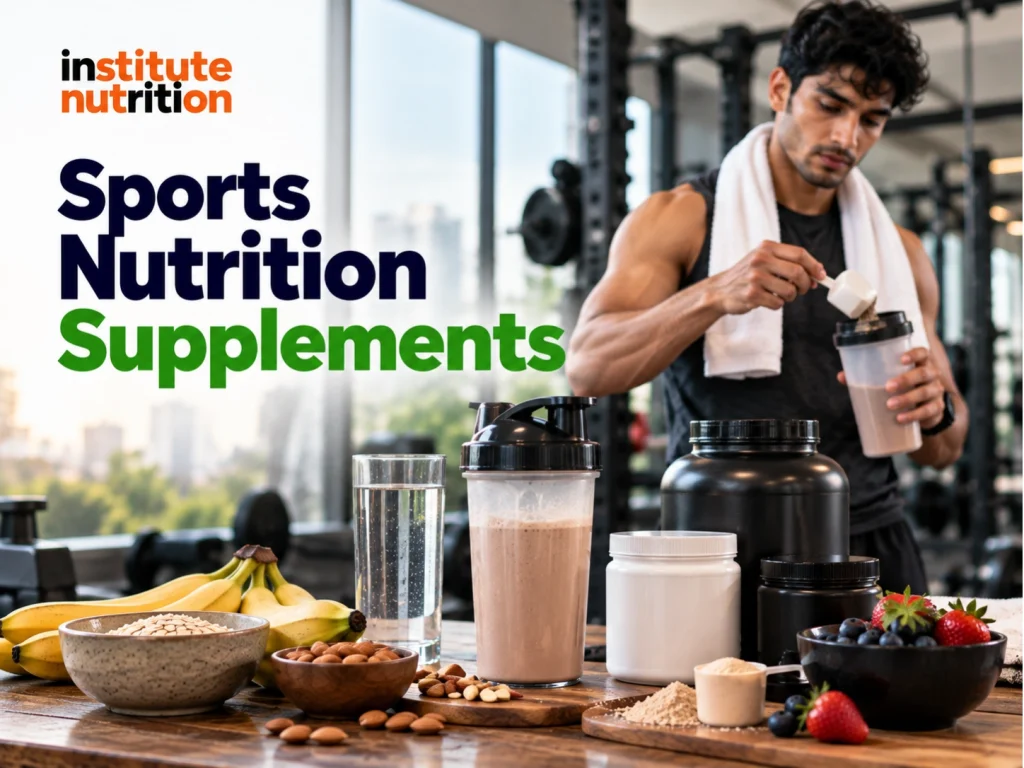
Walk into a gym or browse an online supplement store, and you will find products promising muscle growth, faster recovery, increased energy and better athletic performance.
But do you really need all of them?
Sports nutrition supplements can help in certain situations, but not every product delivers what its marketing promises. Your overall diet, training routine, sleep and recovery habits should come first.
In this guide, we’ll explore commonly used sports supplements, how to evaluate product quality, and what to consider before spending money on them.
What Are Sports Nutrition Supplements?
Sports nutrition supplements are products used alongside a regular diet to support specific nutritional or training goals.
They include protein powders, creatine, caffeine-based products, electrolyte drinks and certain vitamins and minerals.
Some have stronger scientific evidence for particular uses than others. Their usefulness depends on the individual, the product, the goal and the circumstances.
The key is understanding what a supplement is intended to do, whether you need it, and whether it is appropriate for you.
Food First, Supplements Second
Imagine someone buying several expensive supplements while regularly skipping meals and sleeping poorly.
The problem may not be a lack of supplements. It may be the basics.
Before buying a product, consider these questions:
- Are you eating enough to support your training?
- Does your diet provide sufficient protein?
- Are you drinking enough fluids?
- Are you getting adequate sleep?
- Do you have a specific nutritional need that a supplement could address?
A balanced diet should generally be the foundation of sports nutrition. Supplements are most useful when they address a genuine need rather than replace healthy habits.
Sports Nutrition Supplements: What Does the Evidence Say?
Different supplements serve different purposes. The following table provides a simple overview.
| Supplement | Potential use | Important consideration |
|---|---|---|
| Creatine monohydrate | Supports high-intensity exercise performance and training adaptations | Suitability depends on individual circumstances |
| Protein powder | Convenient way to increase protein intake | Not essential if dietary protein is already sufficient |
| Caffeine | May improve aspects of exercise performance and alertness | Can cause anxiety, jitters and sleep disturbances |
| Electrolyte products | Help replace electrolytes lost during prolonged or sweaty exercise | Requirements depend on exercise and sweat losses |
| Vitamin and mineral supplements | Address specific nutritional deficiencies | Avoid unnecessary supplementation without appropriate guidance |
| Fat burners and testosterone boosters | Often marketed for fat loss or muscle growth | Claims may exceed the available evidence; check ingredients carefully |
Research reviewed by the International Society of Sports Nutrition supports the potential benefits of creatine, appropriate protein intake and caffeine for particular exercise-related goals. However, results vary, and these products are not necessary for everyone.
Creatine Monohydrate
Creatine monohydrate is one of the most extensively studied sports supplements.
Research supports its use for improving certain high-intensity exercise activities and supporting gains in lean body mass alongside training.
However, it is not a substitute for appropriate training, nutrition or recovery. Some people experience an increase in body weight, partly due to water retained in muscle.
Anyone with kidney disease, an existing medical condition or concerns about medication interactions should consult a qualified healthcare professional before using it.
Protein Powder
Protein powder is a convenient source of dietary protein, not a magic muscle-building product.
Athletes can obtain protein from everyday foods such as:
- Eggs
- Milk and curd
- Paneer
- Fish and chicken
- Dal and legumes
- Soy products
A protein supplement may be convenient when food options are limited or dietary requirements are difficult to meet. If your regular diet already supplies enough protein, adding a powder may not provide much additional benefit.
Caffeine and Pre-Workout Supplements
Caffeine may improve certain aspects of endurance and exercise performance, but individual responses vary.
Some pre-workout products contain caffeine alongside several other ingredients. This can make it difficult to assess the amount of each ingredient or understand how the product might affect you.
Excessive caffeine can cause palpitations, anxiety, digestive discomfort and sleep problems.
Check the ingredient list carefully and seek professional guidance if you have a medical condition, take medication or are sensitive to caffeine.
Sports Nutrition Supplements That Need More Caution
Be careful with products that promise rapid or dramatic transformations.
Common examples include:
Fat burners: These may contain stimulants or combinations of ingredients with limited evidence for meaningful long-term results.
Testosterone boosters: Marketing claims about increasing testosterone or building muscle may not be supported by strong evidence.
Proprietary blends: These can make it difficult to determine the exact quantity of individual ingredients.
Branched-chain amino acids (BCAAs): If your overall protein intake is already adequate, additional BCAAs may offer limited benefits for many people.
A popular product is not necessarily an effective or appropriate one. Evaluate the evidence, ingredients and potential risks before making a purchase.
How to Choose Safe Sports Nutrition Supplements
Product quality matters just as much as the ingredient itself.
Use this checklist before buying a supplement:
- Read the label: Check ingredients, serving sizes, warnings and recommended use.
- Look for independent testing: Certifications such as NSF Certified for Sport or Informed Sport can help identify products tested for specified quality or prohibited-substance concerns.
- Avoid exaggerated claims: Be sceptical of promises involving instant muscle growth, effortless fat loss or guaranteed performance.
- Buy from reliable sellers: Purchase from the manufacturer or an authorised retailer where possible.
- Consider your individual needs: Your age, health, diet, medication and training goals can affect whether a supplement is appropriate.
Athletes subject to anti-doping rules should take particular care because contaminated supplements can create a risk of testing positive for prohibited substances.
Independent testing can reduce certain risks, but it does not guarantee that a product is suitable for everyone.
When Should You Consult a Professional?
Speak with a qualified healthcare professional before starting supplements if you:
- Have kidney disease, diabetes, thyroid disease or another medical condition.
- Take prescription medication regularly.
- Are pregnant or breastfeeding.
- Are under 18.
- Suspect a vitamin or mineral deficiency.
- Are unsure whether a supplement is appropriate for your needs.
Supplements intended to address a deficiency or health condition should not replace proper assessment and treatment.
How to Decide Whether You Need a Supplement
You can use this simple five-step approach:
- Review your basics: Assess your food intake, sleep, hydration and training routine.
- Identify your goal: Be specific about what you want to address.
- Check the evidence: Understand whether the product has research supporting its intended use.
- Evaluate safety and quality: Review ingredients, testing and potential interactions.
- Monitor the outcome: If a product is appropriate for you, assess whether it provides a meaningful benefit.
Avoid starting several new supplements simultaneously. If you experience unexpected symptoms, stop using the product and seek appropriate medical advice.
Learn More About Sports Nutrition
Understanding supplements requires more than memorising product names. It involves learning about nutrition, training demands, individual requirements and the evidence behind different ingredients.
If you want to explore these topics through structured education, consider the following programs from Institute Nutrition.
- Sports Nutrition Course: Covers sports nutrition principles, the anabolic diet, supplementation and performance-focused nutrition. Explore the Sports Nutrition Course.
- Supplement Prescription Made Easier, Level 1: Explore the supplement-focused course for more information about its curriculum.
- Clinical Nutrition Course: Learn more about the Clinical Nutrition Course if you are interested in condition-focused nutrition education.
You can also read Ryan Fernando’s article, Why Your Protein Shake May Not Be as Healthy as You Think?, for another perspective on evaluating protein products.
Explore more programs through Institute Nutrition’s online nutrition courses.
Important: Institute Nutrition courses are intended for knowledge upgradation. Completing a course does not, by itself, qualify or license someone to practise as a regulated nutritionist, dietitian or healthcare professional.
Frequently Asked Questions
Which sports nutrition supplements are worth considering?
Creatine, protein powder and caffeine have evidence supporting certain uses. Whether any of them is appropriate depends on your individual needs, health and goals.
Do I need supplements to build muscle?
No. Appropriate training, sufficient energy and protein intake, and recovery are the foundations. Supplements may be useful in specific situations but are not compulsory.
Is creatine safe?
Creatine monohydrate has been extensively studied in healthy adults. Individual suitability varies, so people with medical conditions or medication-related concerns should seek professional advice before using it.
Is protein powder necessary?
No. Many people can meet their protein requirements through regular foods. Protein powder is primarily a convenient alternative when dietary intake falls short.
How can I check supplement quality?
Review the ingredient list, serving size and warnings. Look for credible independent testing, purchase from reliable sellers and avoid products making exaggerated claims.
Should athletes consult a professional before taking supplements?
Professional guidance is particularly important for athletes with medical conditions, those taking medication, younger athletes and competitors subject to anti-doping rules.
Final Thoughts
Sports nutrition supplements can have a role in supporting particular training and nutritional goals, but they are not a replacement for a balanced diet or consistent training.
Start with your food, sleep and recovery. Understand your needs, evaluate the evidence and choose supplements carefully.
The best approach is not to take the most supplements. It is to understand which, if any, are appropriate for you.